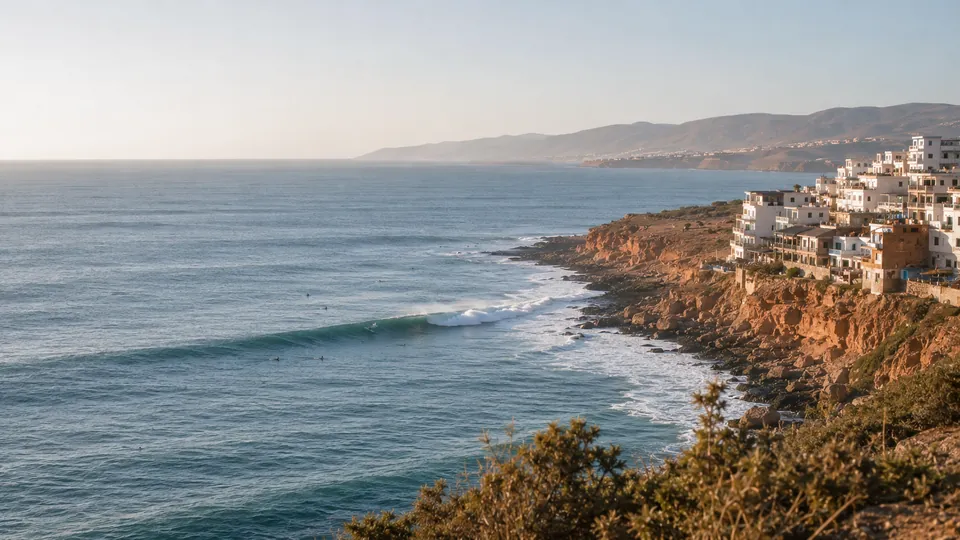
Taghazout is one of the destinations where travelling alone takes the least effort. The village runs on surfing, the camps are built for people arriving on their own, and a week is more than enough to stop being on your own.
The camp does all the work, or none of it
That is the only real criterion. Two models live under the same word.
- The communal camp: shared meals at fixed times, group sessions, evenings together. You arrive alone and leave with people.
- The guesthouse that sells lessons: a room, breakfast, lessons à la carte. Comfortable, and you will be alone in the evening.
Neither is better. But the sales pages use the same vocabulary, and the disappointment always comes from there.
The question is not "is there an atmosphere". It is "are the evening meals shared, and at what time".
What actually helps
- A shared room. Cheaper, and the fastest way to meet somebody.
- A camp that organises something other than surfing. An afternoon out of the water changes a week.
- Low season. Counter-intuitively: fewer people, so smaller groups and faster connections.
The village in the evening
Taghazout has the density you need to go out without a plan. Tamraght, five minutes away, is markedly quieter: restful as a couple, long on your own. If you are travelling alone and hesitating, sleep in Taghazout.
Safety, without the drama
This is an established destination, visited all year. The precautions are those of any coastal village: do not leave your things unattended on the beach, agree the taxi fare before getting in, and do not surf an unfamiliar break alone in the first few days.
Frequently asked
Do I need Arabic or Berber?
No. French works very well, English too in anything to do with surfing.
Is it suitable for a woman travelling alone?
Yes, and it is a significant part of the camps' guests. Communal camps are, again, what makes it simplest.
How long for a first solo trip?
Seven nights. Five is two days settling in and three surfing; you leave having barely started.
Choosing a camp is set out in which surf camp.