Fuerteventura
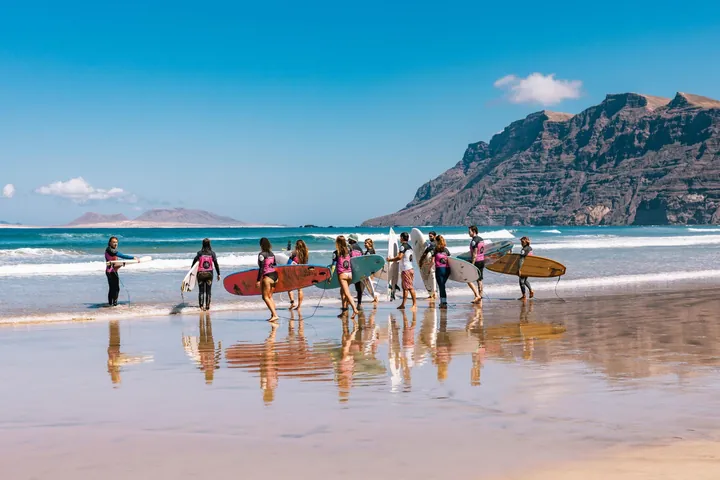
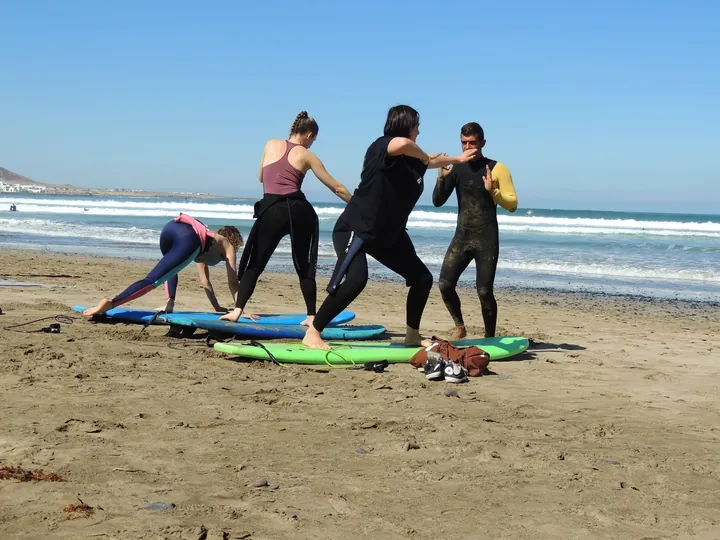
A wind island with one beach that turns its back to the wind: El Cotillo to learn on, the reefs of the north track for later.
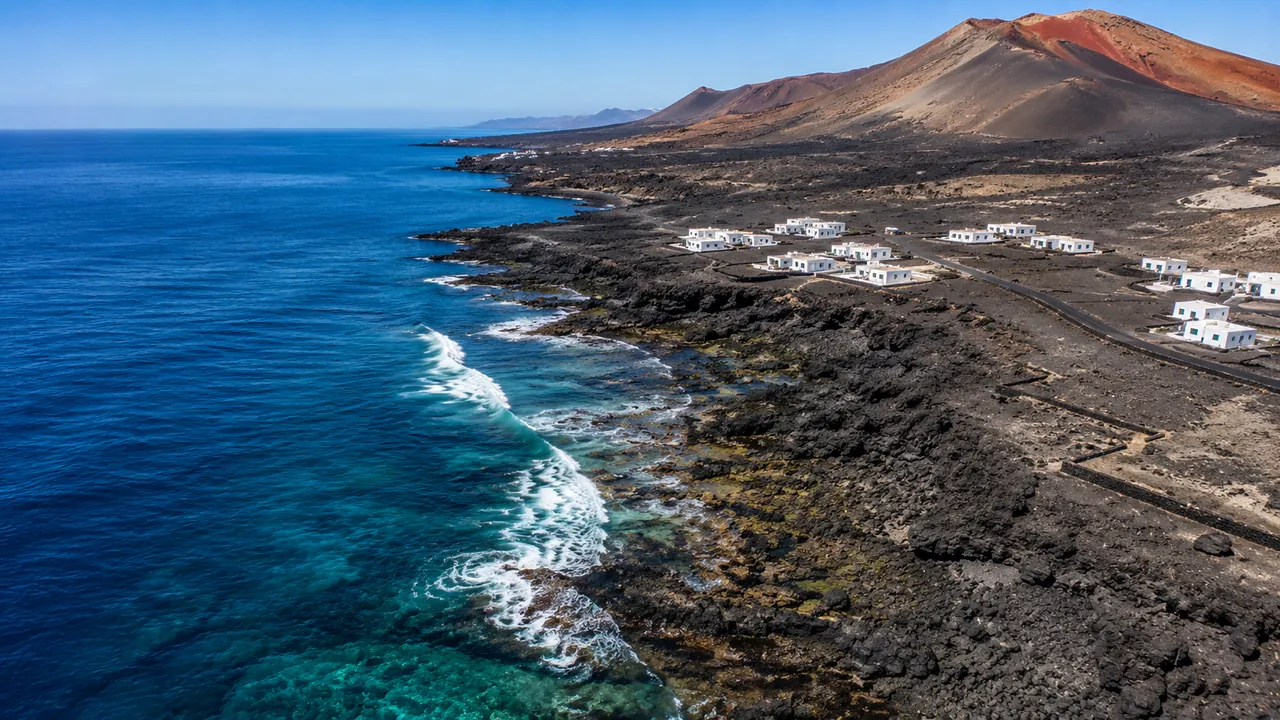
Seven islands with reef breaks on every exposure, warm water and a winter season that rarely goes flat.
Discover every surf region, the spots, surf camps and advice to plan your perfect surf trip.
The Canaries are the one place in Europe where you surf through winter without a thick suit, and that explains everything else.
Seven islands, reefs on almost every exposure, and a position off Africa that puts them squarely in the path of North Atlantic swell. The season runs from October to March, exactly when the mainland turns uncomfortable. Lanzarote and Fuerteventura hold the best-known breaks; Tenerife and Gran Canaria offer more varied conditions and easier logistics.
The thing to understand: these are mostly reef waves, over volcanic rock, not beach breaks. They are hollower, less forgiving, and the bottom punishes a fall. An intermediate arriving expecting the Landes has picked the wrong destination.
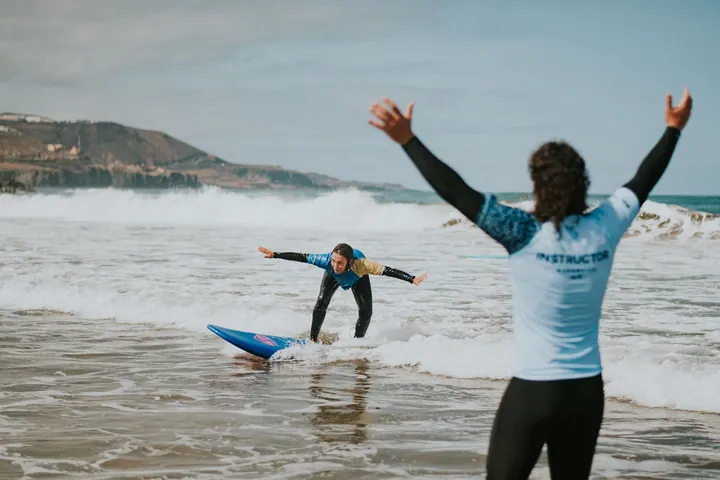
The islands also have sheltered bays where schools work all year, so learning is possible, simply not on the breaks people talk about.
Who it suits: the solid intermediate and the experienced surfer wanting winter swell with bearable water and a four-hour flight. Beginners too, but taught, and on the right beaches.
For each village, how many days of a week bring a rideable swell with a wind that does not chop it up, at the break named. Each month opens its own page.
| January | February | March | April | May | June | July | August | September | October | November | December | |
|---|---|---|---|---|---|---|---|---|---|---|---|---|
| To learn | ||||||||||||
| Experienced | ||||||||||||
| Fuerteventura El Cotillo | 4 | 3 | 3 | 3 | 2 | 2 | 1 | 1 | 2 | 3 | 2 | 3 |
| Gran Canaria La Cícer | 3 | 3 | 3 | 1 | 1 | 0 | 0 | 1 | 1 | 2 | 3 | 4 |
| Lanzarote Playa de Famara | 2 | 1 | 0 | 0 | 0 | 0 | 0 | 0 | 0 | 2 | 1 | 2 |
| Tenerife La Izquierda | 4 | 3 | 2 | 2 | 1 | 0 | 0 | 0 | 2 | 2 | 3 | 4 |
| Water temperature | 19° | 18° | 18° | 19° | 20° | 21° | 22° | 23° | 23° | 23° | 22° | 20° |
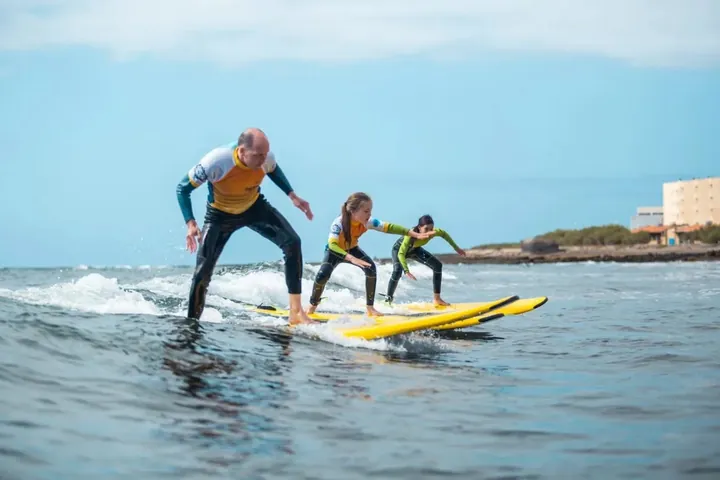
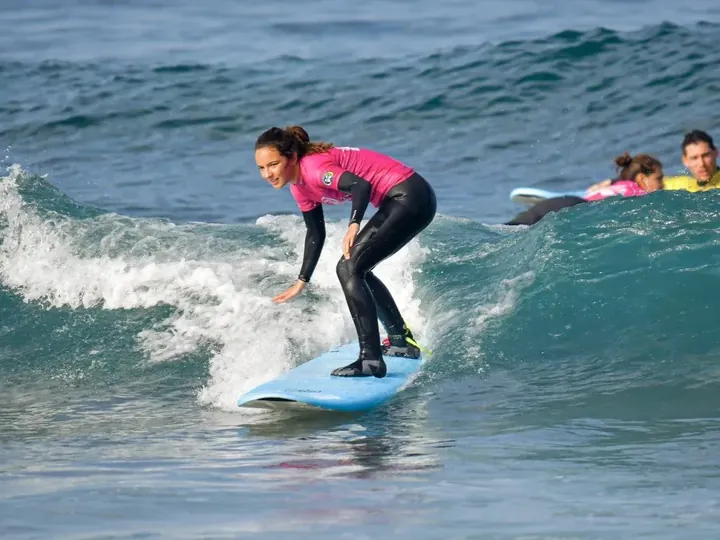
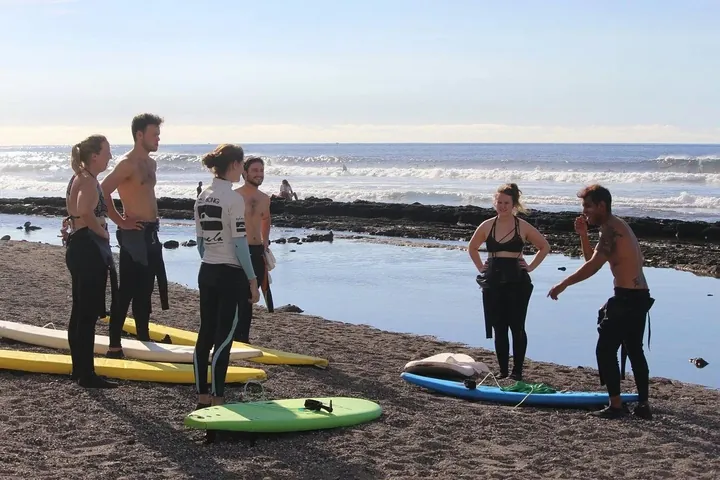
A wind island with one beach that turns its back to the wind: El Cotillo to learn on, the reefs of the north track for later.
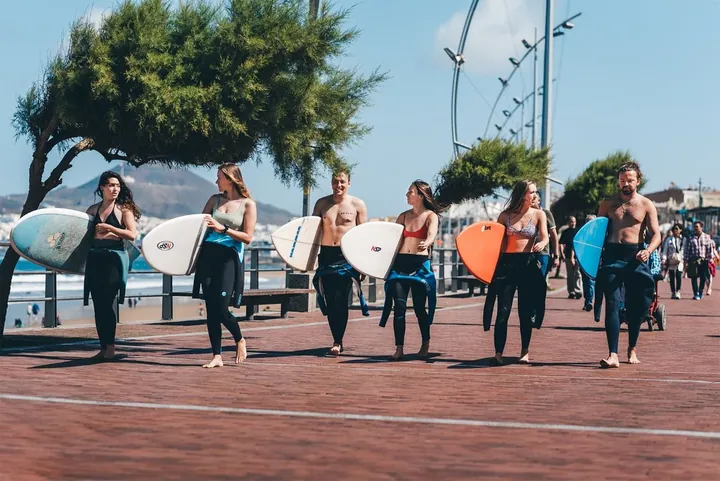
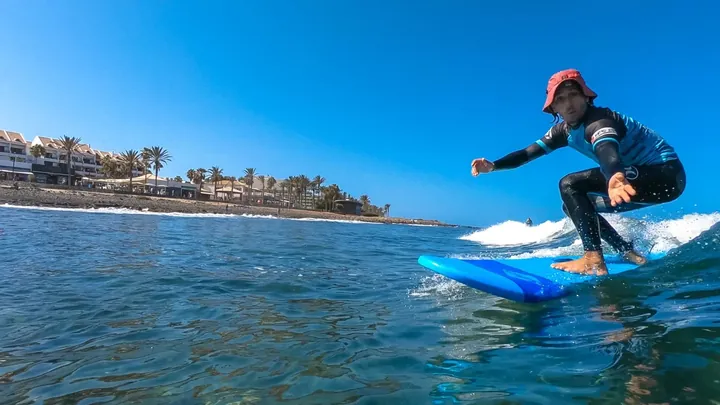
A city beach with a reef across its middle, the schools at one end and a heavy right at the other.
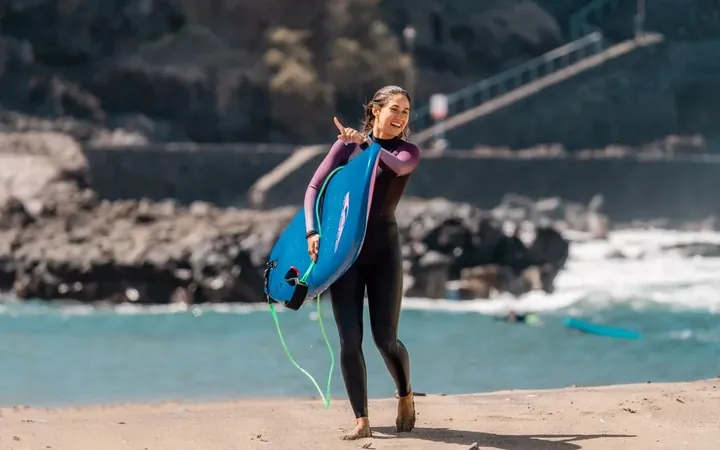
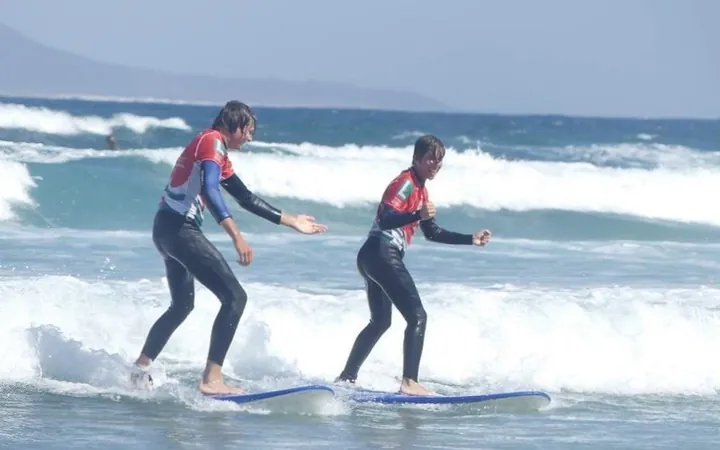
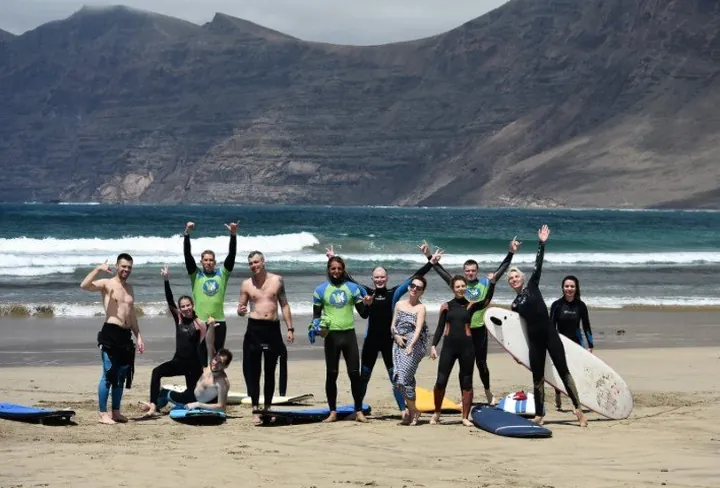
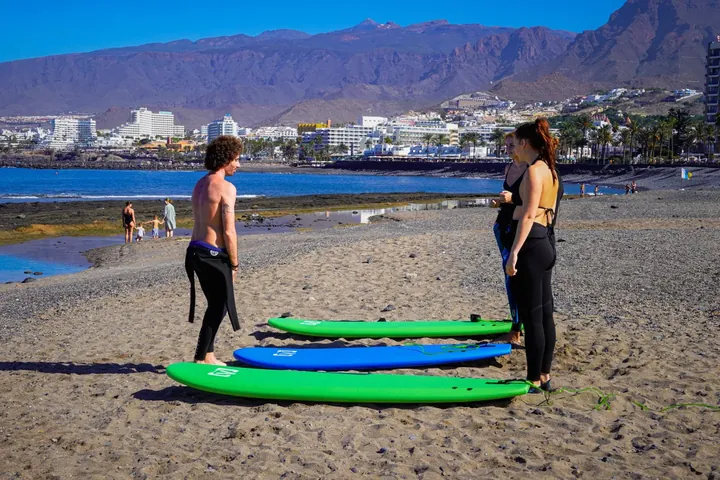
A learners' beach three kilometres long under a cliff, and the trade wind that decides the hour you surf it.
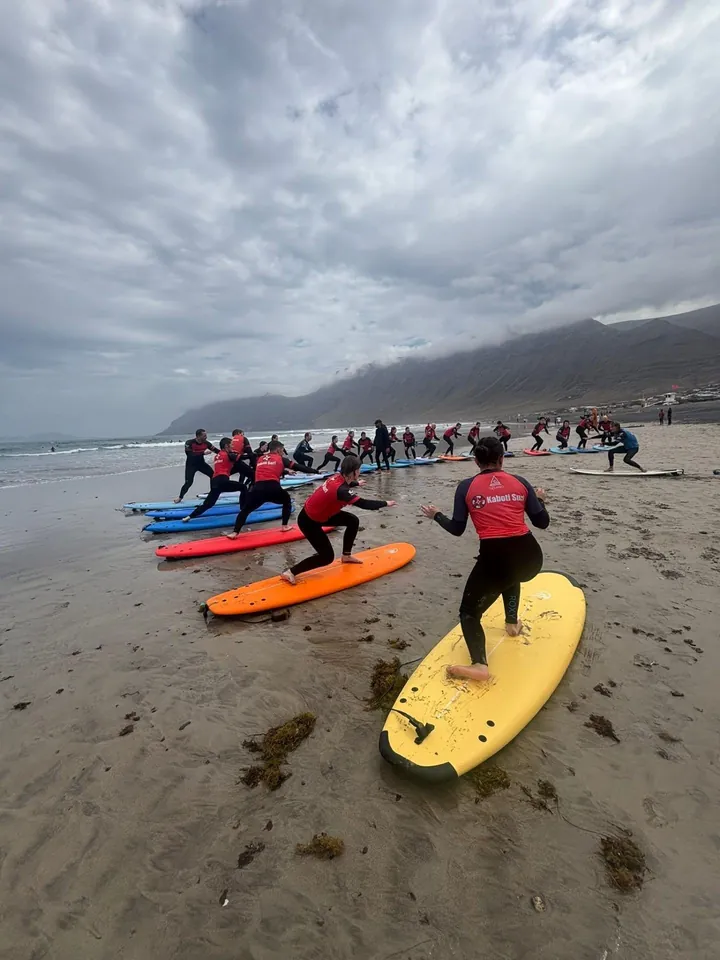
The lee side of the biggest island, where the trade wind that ruins Lanzarote's afternoons blows offshore.

| January | February | March | April | May | June | July | August | September | October | November | December | |
|---|---|---|---|---|---|---|---|---|---|---|---|---|
| Fuerteventura | January : Very good | February : Very good | March : Very good | April : Very good | May : Good | June : Very good | July : Good | August : Good | September : Very good | October : Very good | November : Very good | December : Very good |
| Gran Canaria | January : Very good | February : Very good | March : Very good | April : Good | May : Good | June : Off season | July : Off season | August : Good | September : Good | October : Good | November : Very good | December : Very good |
| Lanzarote | January : Very good | February : Good | March : Off season | April : Off season | May : Off season | June : Off season | July : Off season | August : Off season | September : Off season | October : Good | November : Good | December : Very good |
| Tenerife | January : Excellent | February : Very good | March : Very good | April : Good | May : Good | June : Good | July : Good | August : Good | September : Good | October : Very good | November : Very good | December : Excellent |