Lanzarote
A learners' beach three kilometres long under a cliff, and the trade wind that decides the hour you surf it.
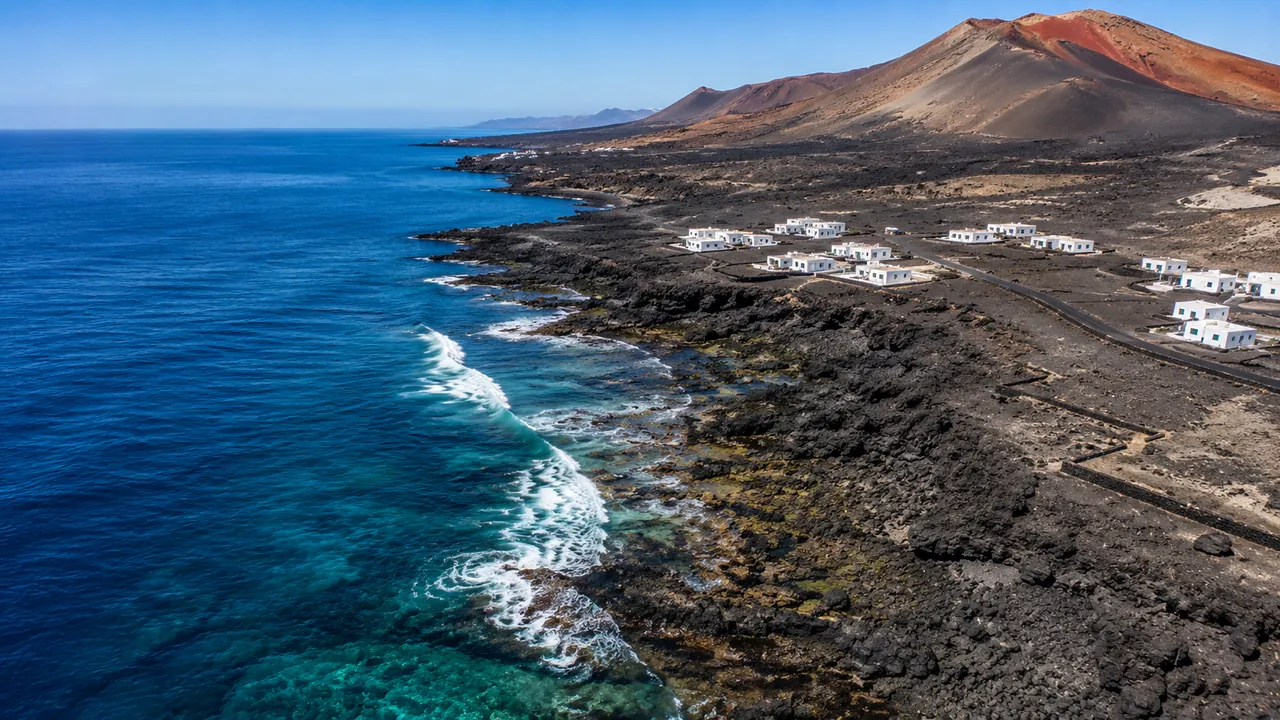
A wind island with one beach that turns its back to the wind: El Cotillo to learn on, the reefs of the north track for later.
Welcome to Fuerteventura
Fuerteventura's surf is in the north of the island, on two coasts that meet at a corner. The north shore runs west from Corralejo along a dirt track, past the hamlet of Majanicho, with a string of reefs in front of it. The west coast starts at El Cotillo, a fishing village where low cliffs drop to a long beach. The swell is the same on both. The wind is not.
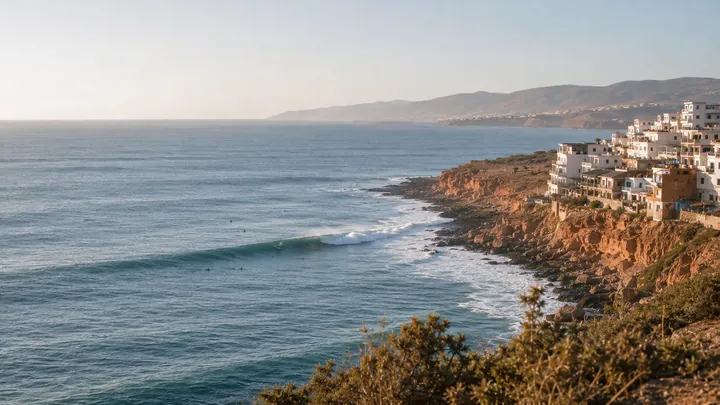
El Cotillo is where the island learns, and the reason is the way it faces. The beach looks west, so the north and north-east winds that sweep the north shore run along the cliffs here or come off the land. January is its month, with sixteen clean days out of thirty, five lost to the wind and nine too small. Famara, across the strait on Lanzarote, has ten in its best month.
The reefs of the track are the step up, and they pay for the wind El Cotillo escapes. Majanicho, a point with lefts and rights in front of a few fishermen's houses, gets four or five clean days in October, its best month. El Hierro, a right over lava a little further west (the reef, not the island), gets ten in December, exactly Famara's split. When they work, they are the best waves on the island, and everyone who lives on it knows.
The season is the archipelago's, October to March, with the water at 18°C in February and 23°C in October. In summer the north shore belongs to the kitesurfers and El Cotillo keeps small, warm waves for lessons. Learn at El Cotillo, and save the track for a winter morning with the wind gone south and a couple of seasons behind you.
Welcome home.
Why Fuerteventura?
Fuerteventura is a wind island, which is why its summer belongs to kitesurfers and its south coast hosts a windsurfing world cup. For a surf week that means a choice every morning: the reefs of the track when the wind drops or swings south, El Cotillo when it does not. Sleep in Corralejo for the evenings, a harbour town with bars, restaurants and the boat to Lobos. Sleep in El Cotillo for the quiet, the lagoons north of the village and the sun going down into the sea. The island gives you somewhere to surf on most winter days. The reefs, you earn.
Where is Fuerteventura?
Fuerteventura airport is just south of Puerto del Rosario, about forty minutes from Corralejo and a little more from El Cotillo. The two towns are twenty-five minutes apart by road; the dirt track along the north shore is slower, and it is the way to the reefs. Corralejo also has the ferry to Lanzarote, half an hour across the strait.
| January | February | March | April | May | June | July | August | September | October | November | December | |
|---|---|---|---|---|---|---|---|---|---|---|---|---|
| Fuerteventura | January : Very good | February : Very good | March : Very good | April : Very good | May : Good | June : Very good | July : Good | August : Good | September : Very good | October : Very good | November : Very good | December : Very good |
No surf camp listed yet for this destination.
A learners' beach three kilometres long under a cliff, and the trade wind that decides the hour you surf it.
A city beach with a reef across its middle, the schools at one end and a heavy right at the other.
The lee side of the biggest island, where the trade wind that ruins Lanzarote's afternoons blows offshore.
Get our exclusive guides, good deals and surf trip inspiration.
No spam, just surf.