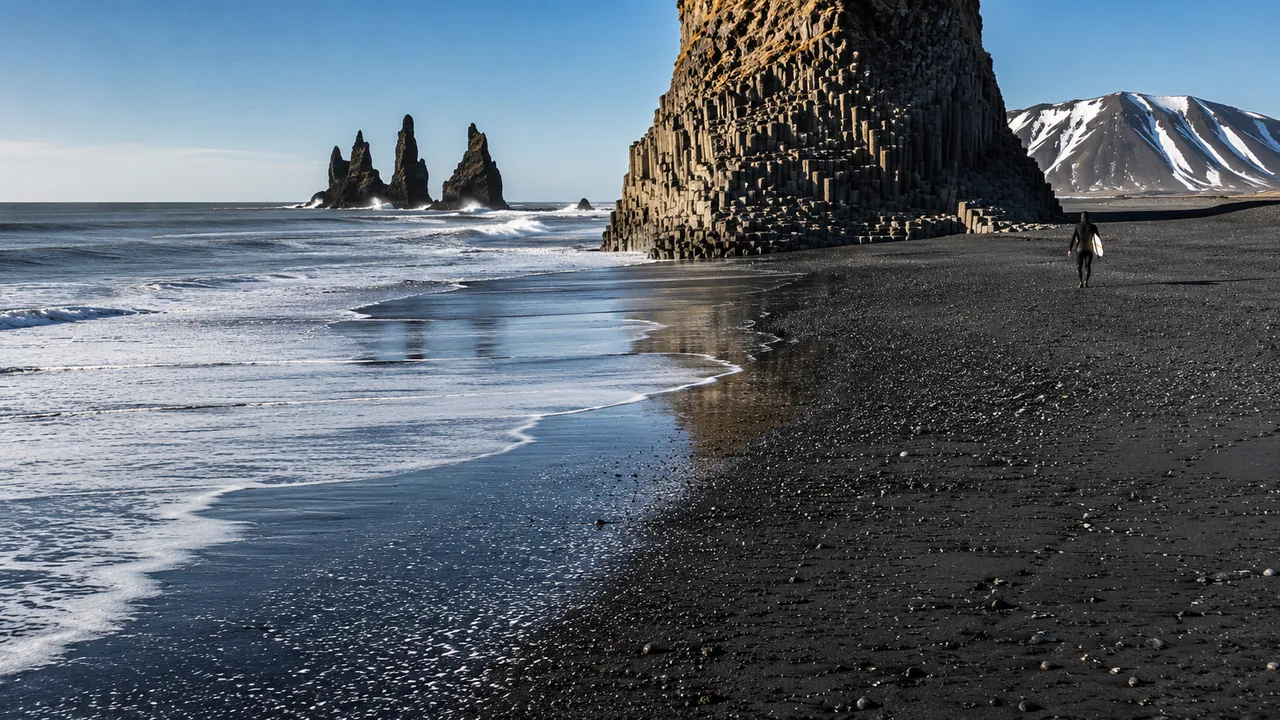
Sandvík is the first Icelandic wave you can reach on the way out of the airport: twenty minutes from Keflavík, on the western shore of the Reykjanes peninsula. Sand, left and right, on a west-south-westerly swell with an east-north-easterly offshore, with currents that make it an intermediate beach rather than a school one.
February is the best month. On a week here, count on three days worth paddling out for: swell with a wind that leaves it alone. Two more will have swell the wind has torn up, and it is rare to find nothing at all.
The water runs 6 to 12 °C depending on the season, so a 5/4 with hood, gloves and boots, and a 6/5 in midwinter. That is the real cost of a trip here, before the flight.
And you will have it to yourself. Not quiet, empty: black sand, the Atlantic, and nobody between you and it. That emptiness is the reason to come here rather than to a warmer coast, and it is why you come with somebody rather than alone.
Spot sheet
- Level
- Intermediate, Advanced
- Wave
- Left and right
- Bottom
- Sand
- Water
- 6 – 12 °C
- Wetsuit
- 6/5 mm + hood → 5/4 mm + hood
- Swell window
- SW – W
- Ideal wind
- ENE
- How often it works
- Consistent
- Crowd
- ●○○○○
- Danger
- ●●●○○, Rips and undertow
Swell window, tide, level and hazards: surf-forecast and Surf Atlas.
A month in figures
In February, the month the forecast guides single out for this coast:
Shares of the month, from the published forecast statistics. The model reads a grid, so neighbouring breaks share a figure: this describes a stretch of coast, not this wave on its own. The other eleven months are not published.