Reykjanes
Two breaks on a lava peninsula forty minutes from Reykjavík, and nobody on either of them.
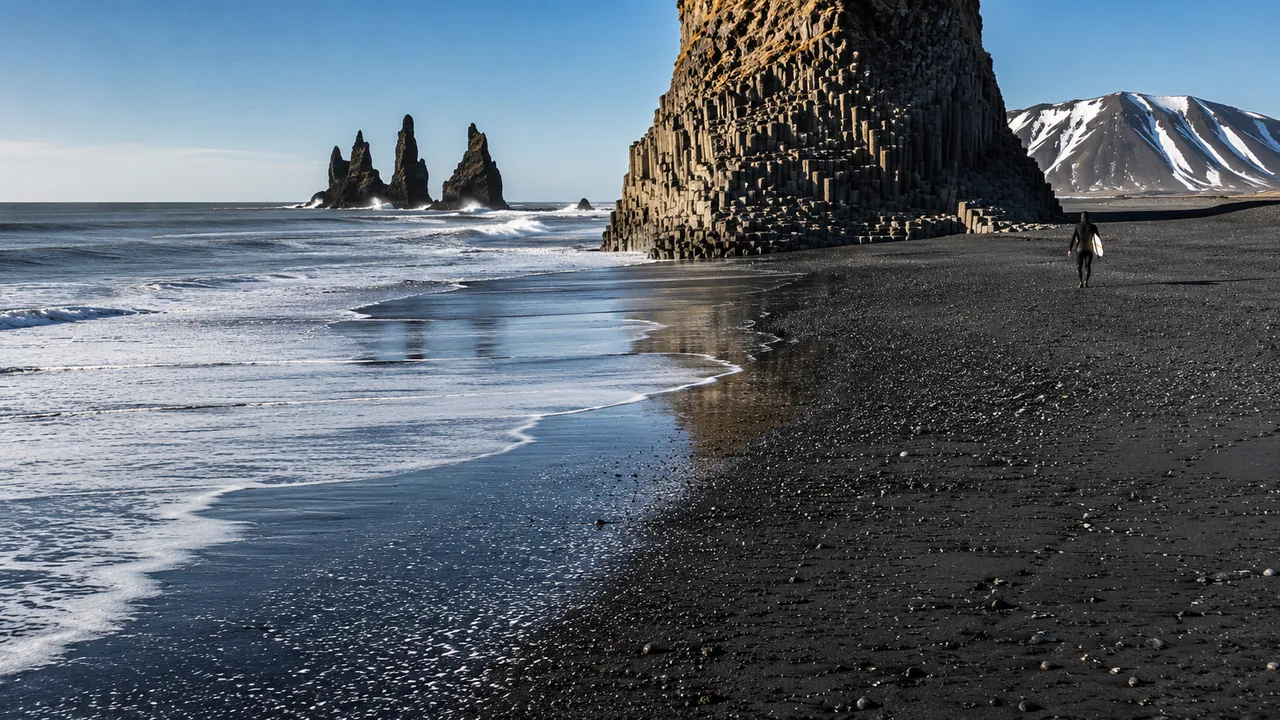
Volcanic beaches, near-empty line-ups and conditions that ask for real equipment and a real forecast.
Discover every surf region, the spots, surf camps and advice to plan your perfect surf trip.
Iceland is a surf destination for very few people, and that is exactly the point.
The Reykjanes peninsula, less than an hour from Reykjavik, holds most of it: black volcanic sand, reefs, and North Atlantic swell arriving unfiltered. The line-ups are almost always empty, not because the place is a secret but because the conditions put most people off.
Cold is the main subject. A thick suit, hood, gloves and boots are not optional, in any season. Winter days are very short, which cuts the usable window to a few hours, and roads can close.
The best window runs from September to November: the swell is there, the light still holds, and the water has not reached its lowest. Summer offers endless days and rare waves.
Who it suits: the experienced, well-equipped surfer who comes as much for the landscape as the wave. Nobody should learn to surf here, and a good trip assumes a car, time, and accepting that some days you will not go in.
Two breaks on a lava peninsula forty minutes from Reykjavík, and nobody on either of them.