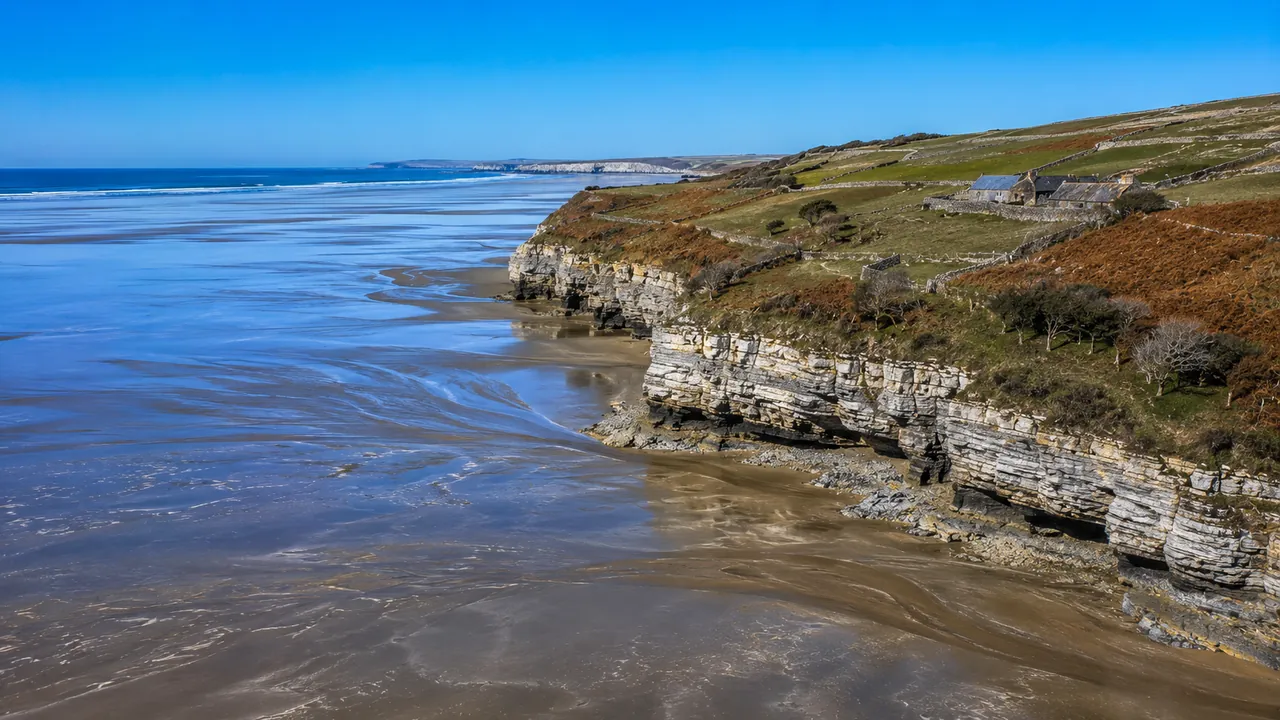
Langland Bay is on the south side of the Gower, sand breaking left and right on a southwest swell with a northerly offshore, and good at all stages of the tide.
Its numbers are the poorest of any break here, and that is the point of it. January, its best month, is clean two days out of thirty, blown out thirteen and too small sixteen. Read that alongside Llangennith twenty minutes north, which wants a westerly and an easterly wind: the two are rarely good together, and rarely bad together either.
That is why it is often crowded. A south-facing bay with a northerly offshore is the only thing working on a lot of Welsh days, and everybody knows it.
Rocks are the named hazard, at the edges rather than in the middle of the bay. It is the more sheltered of the two and the easier one to learn in, which combined with the crowd is the trade: gentler water, more people in it.
Spot sheet
- Level
- Beginner, Intermediate
- Wave
- Left and right
- Bottom
- Sand
- Water
- 7 – 18 °C
- Wetsuit
- 6/5 mm + hood → 4/3 mm
- Swell window
- SSW – WSW
- Ideal wind
- N
- Best tide
- any tide
- How often it works
- Consistent
- Crowd
- ●●●●○
- Danger
- ●●●○○, Rocks
Swell window, tide, level and hazards: surf-forecast and Surf Atlas.
A month in figures
In January, the month the forecast guides single out for this coast:
Shares of the month, from the published forecast statistics. The model reads a grid, so neighbouring breaks share a figure: this describes a stretch of coast, not this wave on its own. The other eleven months are not published.