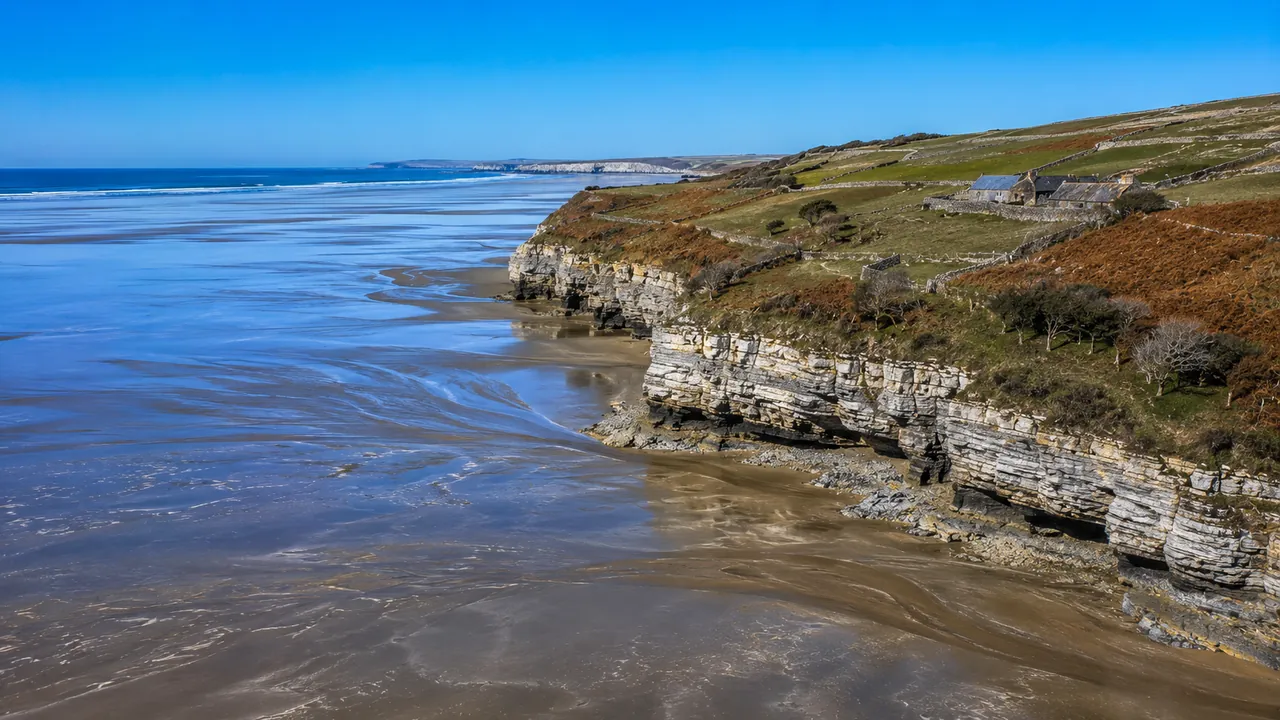
Llangennith is the west end of the Gower, five kilometres of sand taking a westerly swell straight off the Atlantic with an easterly offshore, best around mid tide.
April gives eight clean days out of thirty, fourteen blown out and eight too small. The middle number is the story of surfing here: the swell shows up, the wind takes it away, and the trip is decided the night before.
It is the indicator beach for the peninsula. If Llangennith is flat, the rest of this coast is flat, and locals check it first for that reason alone.
Two things about the water rather than the wave. The beach shelves gently, which makes the paddle out long and tiring in anything of size, and the rips run hard against the cliffs at either end. It is a beginner beach in the middle and not at the edges, and on three miles of sand there is always room to move away from the crowd.
Spot sheet
- Level
- Beginner, Intermediate
- Wave
- Left and right
- Bottom
- Sand
- Water
- 7 – 18 °C
- Wetsuit
- 6/5 mm + hood → 4/3 mm
- Swell window
- WSW – WNW
- Ideal wind
- E
- Best tide
- mid tide
- How often it works
- Consistent
- Crowd
- ●●●●○
- Danger
- ●●●○○, Rips and undertow
Swell window, tide, level and hazards: surf-forecast and Surf Atlas.
A month in figures
In April, the month the forecast guides single out for this coast:
Shares of the month, from the published forecast statistics. The model reads a grid, so neighbouring breaks share a figure: this describes a stretch of coast, not this wave on its own. The other eleven months are not published.