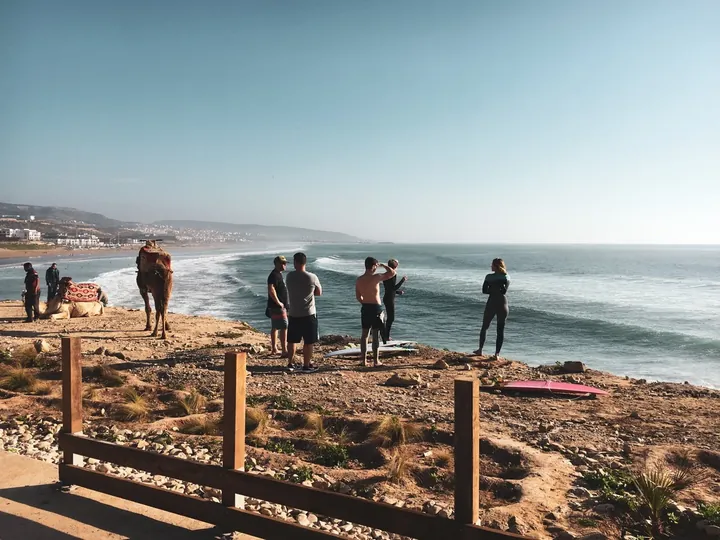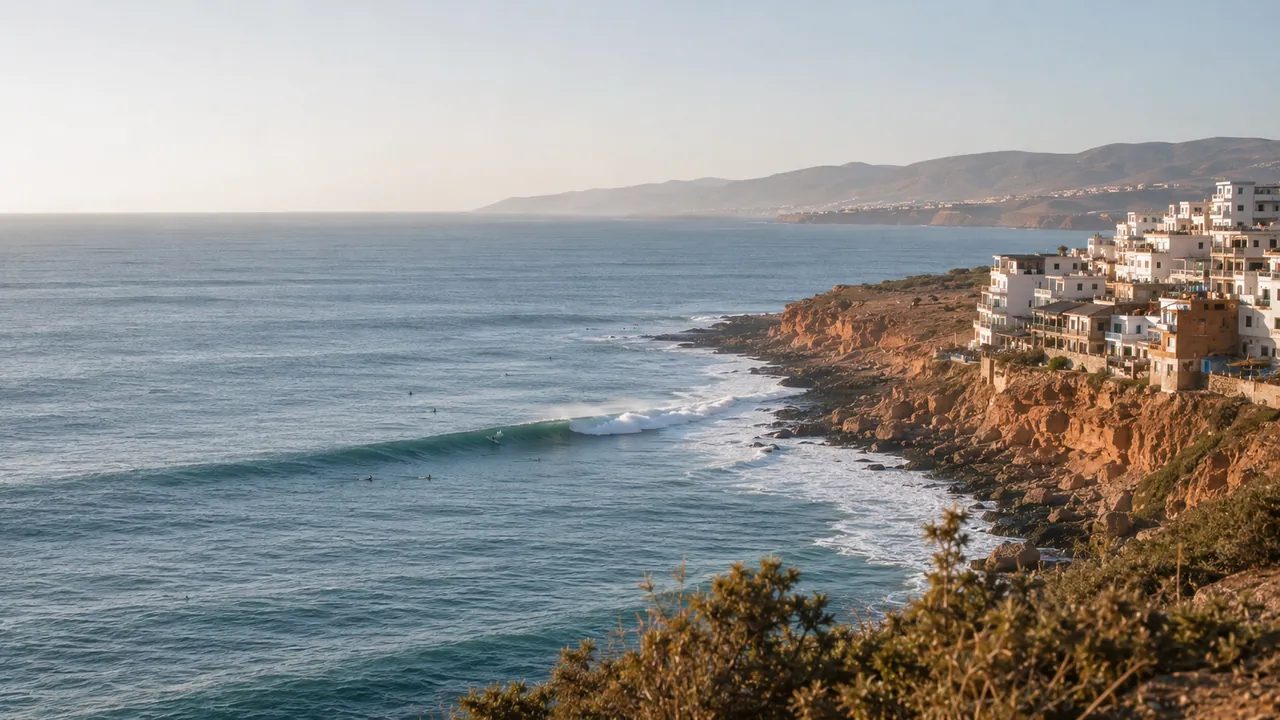
Anchor Point is the wave Morocco is known for, and the reason Taghazout became a surf town. A long right peeling off a rocky headland, with the take-off at the stone end where the wall stands up hollow and fast before the shoulder opens out.
It wants a northwest groundswell and a northeasterly offshore, and it works around low tide. January is its best month: across thirty days, expect eighteen clean and surfable, seven blown out by wind, five too small.
The cost is the crowd and the bottom. It fills as soon as it turns on, and there are rocks in the line-up. Not a wave to learn on.
Spot sheet
- Level
- Advanced, Expert
- Wave
- Right
- Bottom
- Point break
- Water
- 17 – 22 °C
- Wetsuit
- 4/3 mm → Shorty
- Swell window
- WNW – NNW
- Ideal wind
- NE
- Best tide
- low tide
- How often it works
- Very consistent
- Crowd
- ●●●●○
- Danger
- ●●●○○, Rocks
- Parking
- Available
Swell window, tide, level and hazards: surf-forecast and Surf Atlas.
Conditions by month
| January | February | March | April | May | June | July | August | September | October | November | December | |
|---|---|---|---|---|---|---|---|---|---|---|---|---|
| Anchor Point | January : Excellent | February : Excellent | March : Very good | April : Very good | May : Good | June : Off season | July : Off season | August : Off season | September : Good | October : Very good | November : Excellent | December : Excellent |
- Good
- Very good
- Excellent
A month in figures
In January, the month the forecast guides single out for this coast:
Shares of the month, from the published forecast statistics. The model reads a grid, so neighbouring breaks share a figure: this describes a stretch of coast, not this wave on its own. The other eleven months are not published.