Surfing in Sri Lanka in March

Surfing in Sri Lanka in March

March is about how long you stay in the water: the sea reaches 29°C, and a four-hour morning stops being an ambition.

  • Water temp.
    29 °C
  • For learning
    Very good
  • The month
    Excellent

Conditions in March

  • Water temp. : 29 °C
  • Wetsuit : Shorty or 2 mm
  • Air temp. : 32 °C
  • Crowds : High
  • Prices : High

March is the last full month of the north-east monsoon and often the pick of the three. The swell is unchanged, the mornings are still offshore, and the season crowd thins as the European winter ends. From April the monsoon turns and this coast loses the wind that makes it work.

What changes is the heat. March into April is the hottest stretch of the Sri Lankan year and the sea follows it to 29°C, and the honest consequence is about duration rather than comfort. On a cold coast a session ends when you start shivering, which is usually well before you have stopped wanting to surf. Here it ends when your arms do. On a run of long, mellow reef waves that difference is the whole trip: you get three or four times as many waves in a week, and the waves are what you came for.

Two coasts in the world are at their own peak in March, and the other one is Colombia. Its reef at Pico de Loro is a genuinely extraordinary wave, sixteen clean days in thirty, and you reach it by flying forty minutes from Medellín to a jungle strip and continuing by boat, and its beginner rating is the lowest there is. March at 29°C with a school in the bay and a reef ten minutes away is the other kind of trip entirely.

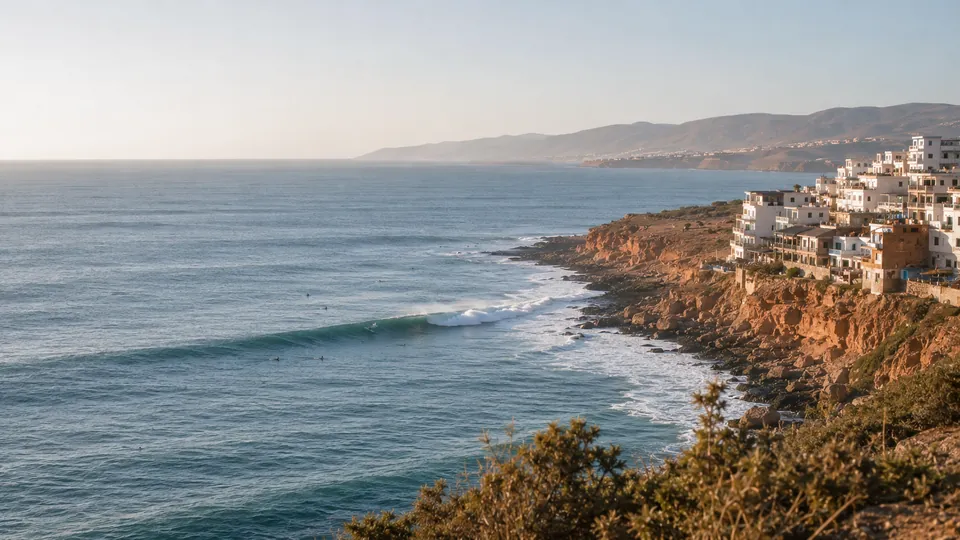
If you are choosing on the wave, base yourself at Ahangama. The Rock is a reef peak breaking both ways several hundred metres off Kabalana beach, so what looks rideable from the sand is not what is rideable from the peak, and it works at any tide. If you are choosing on the week, Hiriketiya is an hour and a half east: a horseshoe cove three hundred metres across that holds a wave on the days the open beaches close out, and lanes, flip-flops and early nights around it.

Learning in March

  • For learning : Very good

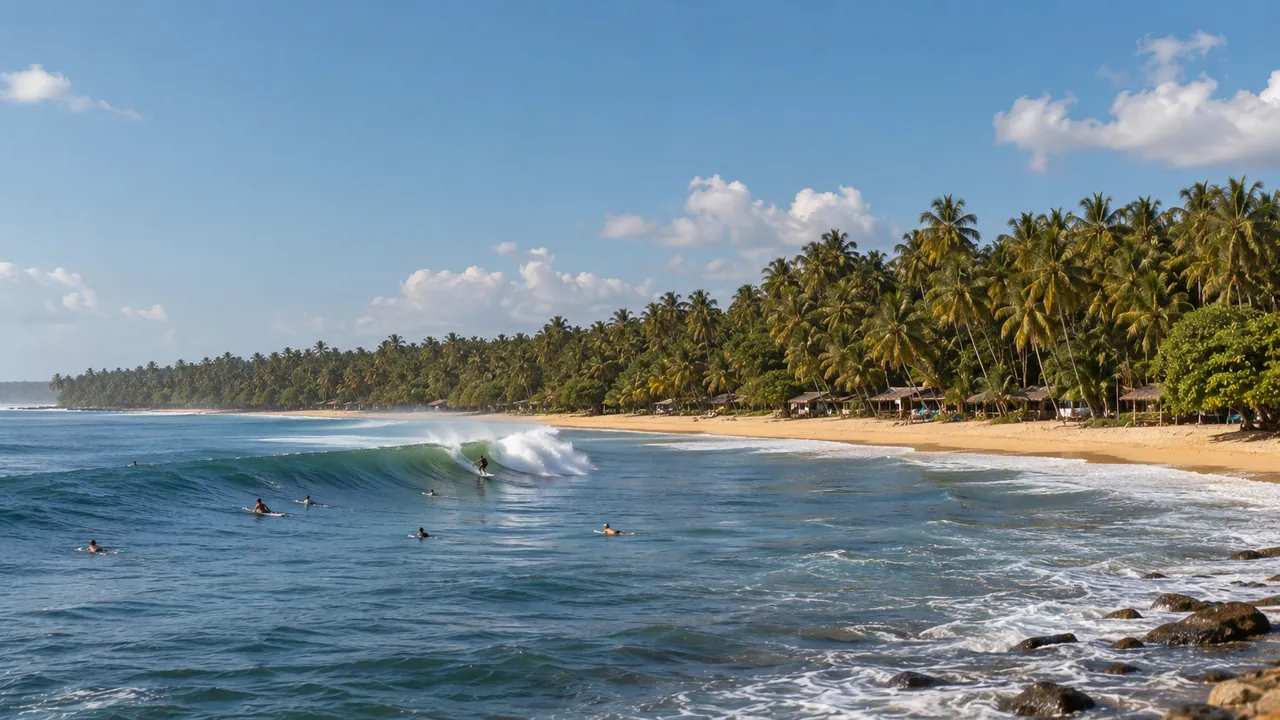
For a first surf week in Ahangama or Weligama, March is the pick of the southern season, on the balance of everything rather than on the count alone. Weligama drops to three days out of seven as the monsoon starts loosening its grip, and that is the single thing working against it. Everything else improves at once: the season crowd has flown home with the end of the European winter, the sea reaches its yearly high of 29°C, and prices have come off the peak.

The arithmetic of a learning week is not really about days, it is about waves, and three uncrowded days beat four shared ones every time. At 29°C you will stay in until your shoulders stop working rather than until you get cold, which on a bay of long, soft, waist-high lefts means a great many more attempts per session than a cold coast will ever give you. The offshore is still a morning wind, so the shape of the day is unchanged: in the water early, out when it softens, back in late afternoon with the light still holding, because at this latitude the day does not shorten.

After March the easy option disappears from this island until November, and that is the sentence to plan around. If you are learning and your dates are movable, take March and take it whole. Weligama stays the base, with Main Point at the eastern end of the bay as the step up when the beach break stops teaching you anything, and Hiriketiya an hour and a half east as the insurance: two headlands wrap the swell into the cove so it keeps a wave when the open coast closes out. Hiriketiya is lanes and flip-flops and early nights, which is either exactly what you want after a week of learning or exactly what you do not.

Where a beginner goes in March

These spots are reachable all year. What the month changes is the size of the waves, not the access.

For an experienced surfer

  • Surf : Excellent

March at Ahangama is the last full month of the north-east monsoon and, for somebody who already surfs, often the pick of the three. Plantations gives four days out of seven in March rather than five, and what it loses goes to the wind and not to the swell: a third of the month is blown out against a sixth in January. The mornings still hold, which is what matters, and the coast is emptier than it has been since November.

This is the month to spend at Ahangama if you are choosing on the wave. The Rock, off Kabalana beach, is a reef peak that breaks both ways several hundred metres from the sand and works at any tide. The distance is the point rather than a detail: what looks rideable from the beach is not the wave you meet when you get to the peak, and the paddle sorts out who is committed. Urchins on the bottom, an intermediate spot whatever anybody tells you, and the best-rated month of its year. Midigama is twenty minutes east if you want four reefs instead of one, and Kabalana and Plantations between them are the whole argument for basing yourself on this stretch.

The heat is the other change and it works entirely in your favour. March into April is the hottest stretch of the Sri Lankan year and the sea follows it up to 29°C, so a four-hour morning stops being an ambition and becomes a decision. On a run of long, mellow reef waves that is the difference between a trip and a good trip. From April the offshore becomes a morning-only proposition and the whole coast turns into a question of getting up, so March is the last month you can take an afternoon look and expect to find something.

Questions about March

  • Is March a good month to surf in Sri Lanka?

    March is frequently the pick of the southern season. It runs on the same offshore mornings as January and February, the holiday crowd has flown home as the European winter ends, and the sea is warmer than at any point since the previous April.

  • Which coast of Sri Lanka works in March?

    The south, for the last complete month of its run. Everything from Hikkaduwa to Mirissa is still getting clean early conditions in March. Arugam Bay on the eastern side has not woken up and will not until roughly May.

  • Is March a good month to learn to surf in Sri Lanka?

    It is arguably the best of the southern season. You get January's sand bottom and January's waist-high inside at Weligama with a fraction of the company, and an instructor who can actually watch you. From April onwards the easy option disappears until November.

  • How warm is the sea in Sri Lanka in March?

    29°C, climbing towards the April maximum of 30. Air readings come from the station at Galle, half an hour west of Ahangama, and the eastern side of the island runs a degree or two above them. Nothing in March calls for neoprene.

Where these figures come from

Air temperature: WMO / NOAA 1991-2020 normals. Taken at Galle, on the south-west coast twenty minutes from Ahangama, with the east coast running a degree or two warmer. Water temperature: seatemperature.org and weather-and-climate. Crowds and prices are an editorial judgement, not a measurement.

Join the Bookawave adventure

Get our exclusive guides, good deals and surf trip inspiration.

No spam, just surf.