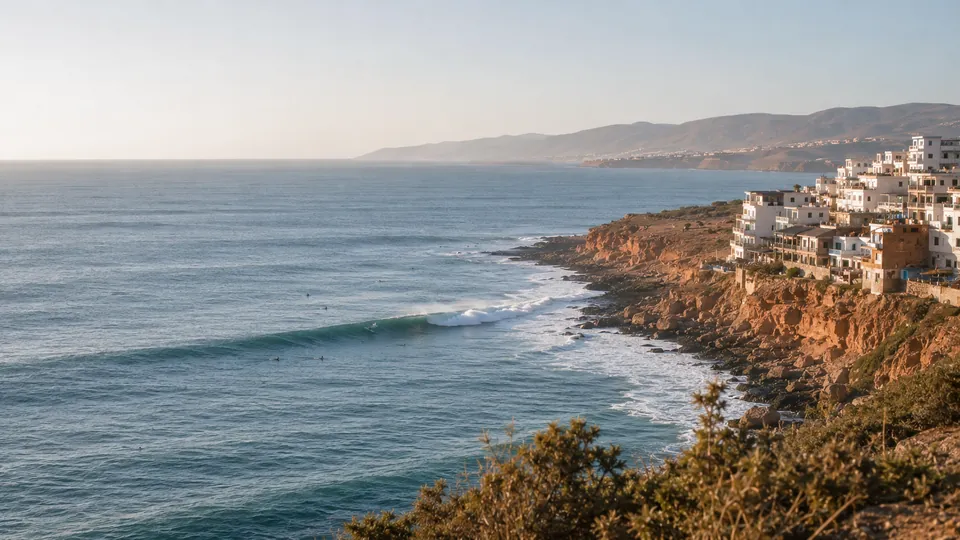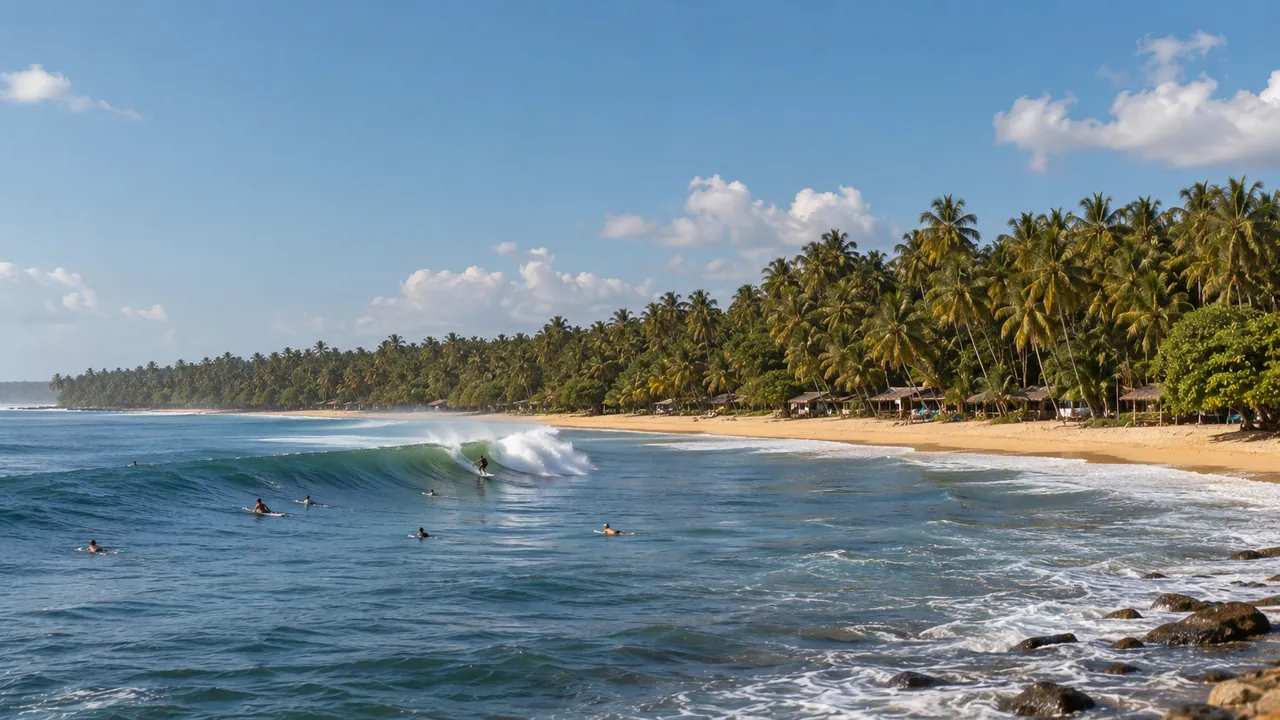
January sits in the middle of the south coast season. The north-east monsoon crosses the island and reaches Weligama, Midigama and Ahangama as an offshore wind, so the reefs and the bay hold their shape through the morning and often all day. In a week, count on five days out of seven worth paddling out for at Plantations in Midigama and at The Rock off Kabalana beach, and four in Weligama bay, where the bottom is sand. The days you lose go to wind rather than to a flat sea, so even a bad day usually has an early session in it.
The sea is 28°C and nobody wears a wetsuit. Six degrees north of the equator the day barely changes length through the year, so January gives you two sessions in daylight, one early and one late, with the heat of the middle of the day in between.
Where you sleep matters more than the forecast, because the three villages sit a few minutes apart on the same coast road and share the same swell. Weligama is the one for a first week: the only sand, a wave at every stage of the tide, and the shortest transfer, two and a half to three hours from the airport. Midigama has four reefs across two kilometres, room on them, and nothing to do after dark. Ahangama has The Rock and the evenings: rooftops, cocktail bars facing the sunset, cafés that open early.
The catch is company. January is high season, in the water and in the price of a room, and the fortnight around New Year is the busiest of the southern year. If your dates can move, fly after the first week of January, and book the camp before the flight.