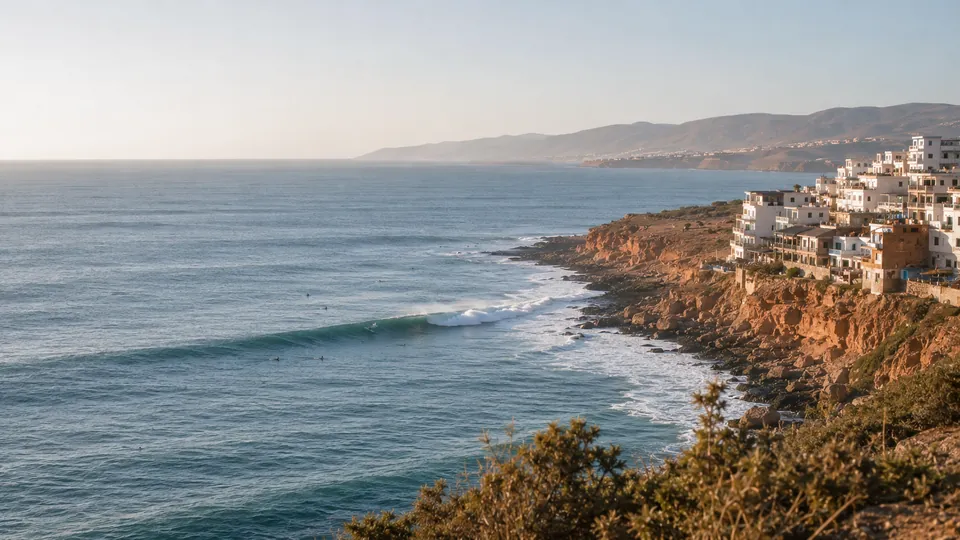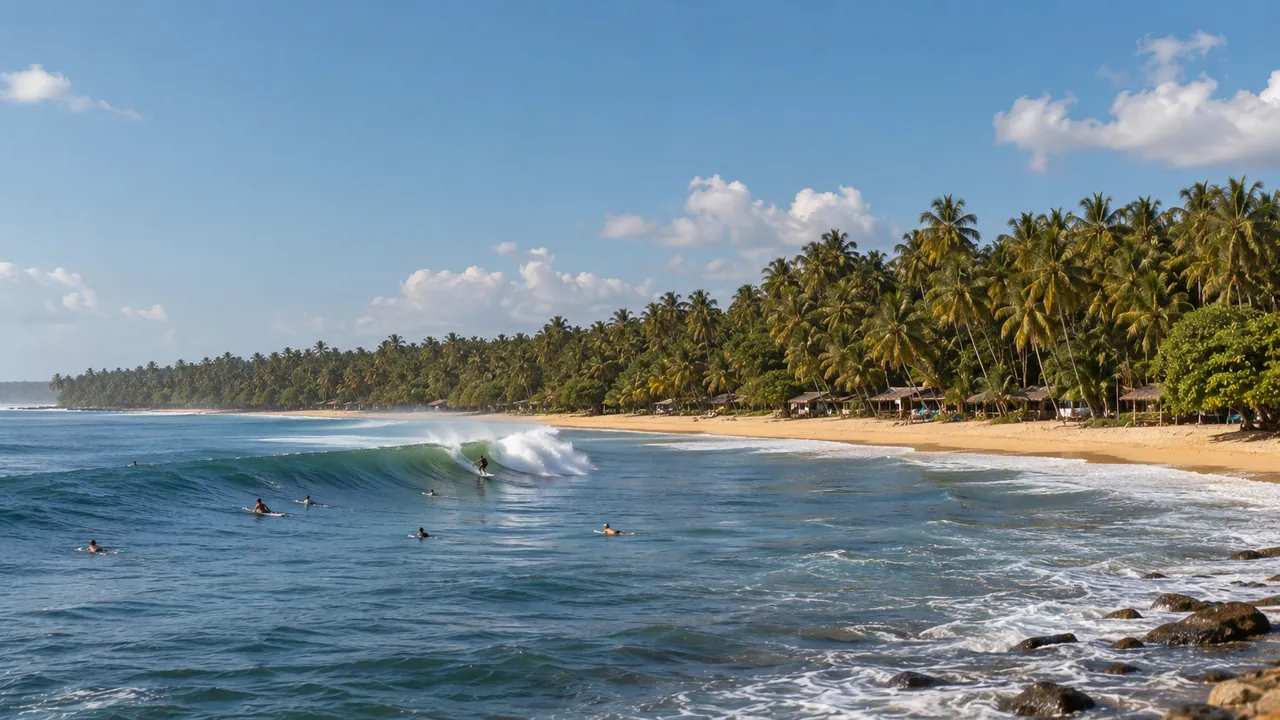
The south-west monsoon is at full strength in July, so on the east coast the offshore holds through most of the day rather than just the morning, and the swell from the Indian Ocean is as steady as it gets. Pottuvil Point, the long right north of Arugam Bay, comes up clean five days out of seven. The Main Point at the bay runs long and workable, and it has the crowd its reputation earns it.
The east coast has the opposite problem to the south. On the south coast in winter, the days you lose go to wind; here they go to a sea that is too small. At Whiskey Point in July the wind spoils almost nothing, and the swell falls short on most days. So the forecast you read here is a height, and the one you read in Weligama in January is a direction. When the swell is up, the east works.
A week here is a week of riding a short coast rather than surfing one wave, and July is when that matters most. Whiskey Point, Peanut Farm and Elephant Rock spread the same swell over twelve kilometres and take the pressure off the Main Point. A scooter or a tuk-tuk is part of the trip, and the camps run shuttles.
The south, meanwhile, is shut: Weligama and Midigama have almost no clean day until November. Arugam Bay is six to eight hours from the airport across the interior, so the first day of the trip is a travel day.
July is also when the town is at capacity. The main street is a row of bars full of surfers from everywhere, anyone arriving alone has company by the first evening, and the beds run out. It is high season in price as well as crowds. Book early, or look at September: the same coast with fewer people and lower prices, and fewer good days.