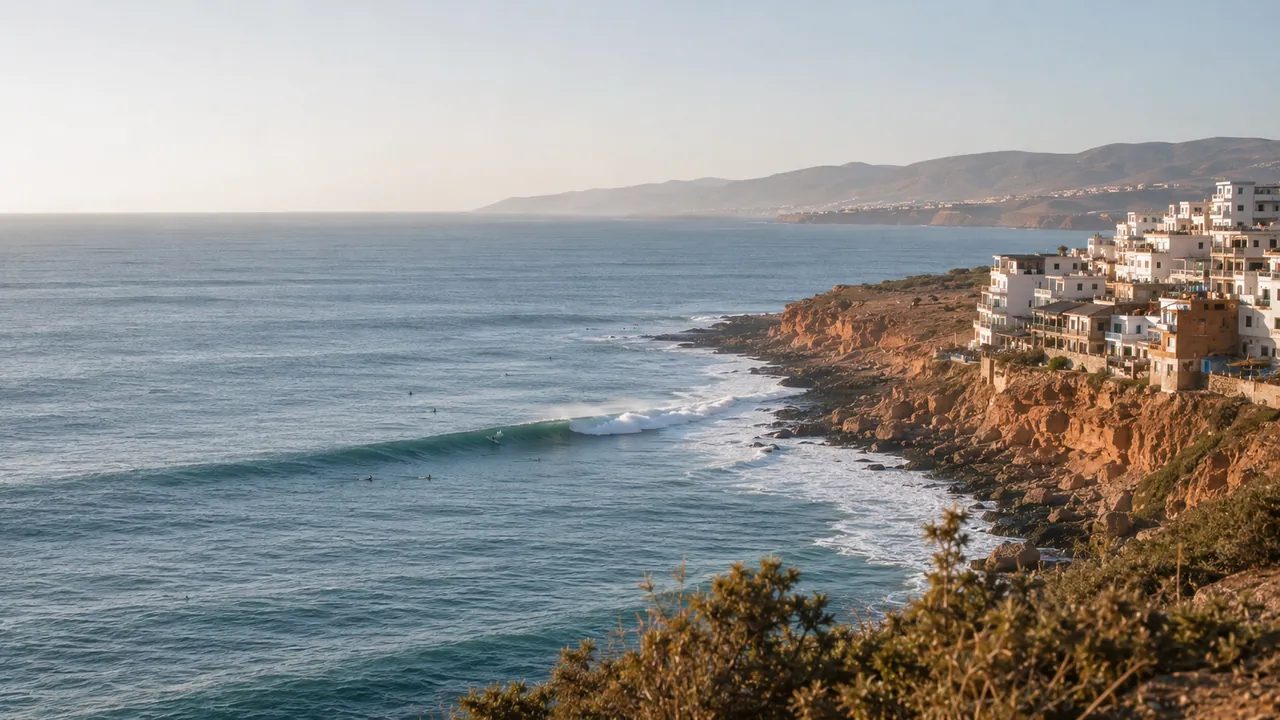
Surfing in Morocco in March

Surfing in Morocco in March

March keeps most of winter's long swell and drops the crowds and prices a full step.

  • Swell
    1.8 m, 12.5 s
  • Water temp.
    18 °C
  • For learning
    Very good

Conditions in March

  • Swell : 1.8 m
  • Period : 12.5 s
  • Water temp. : 18 °C
  • Wetsuit : 3/2 mm, 4/3 mm for long sessions
  • Air temp. : 23 °C
  • Sunshine hours per day : 8.6 h
  • Rain : 31.3 mm, 3 days
  • Workable wind : 57 %
  • Crowds : Medium
  • Prices : Medium

March is the month regulars aim for, and the reason is a gap between two figures. The swell keeps its winter period, the interval between waves that says how far they have travelled and how much push they carry, while its size drops from over two metres to 1.8 m. Crowds and prices, meanwhile, fall a full step, from high to medium. Most of February's surf, without the queue.

The day counts hold up better than you would guess. Counting the clean days, those with a rideable swell and a wind that leaves it smooth, Anchor Point, Banana Beach and La Baie at Imsouane each give four in a week, as in February. It is the exposed points that thin out: Killer Point, Boilers and Cathedral Point drop to two, while Hash Point holds three. For someone learning, the smaller swell is good news. The sandbars stop turning into walls on the bigger days, and for the first time since October a first lesson rarely meets a wave too heavy.

For the traveller that means a camp at medium prices where January charged the top rate, fewer people on each set at Anchor Point, and the same 18°C sea as in winter, so the wetsuit does not change: a 3/2 for a lesson, a 4/3 for a long session. It is still a three-hour flight from much of Europe, and the two coasts at their peak this month are long-haul.

The weather turns with it. The sun climbs to eight and a half hours a day, the air to 23°C, and the three rainy days of March are the last real rain until autumn. A week in March is long mornings on the points or the sand, lunch in the sun rather than in a jacket, and a village with room in it again. If you want the Taghazout points and can choose your month, choose this one before you choose January.
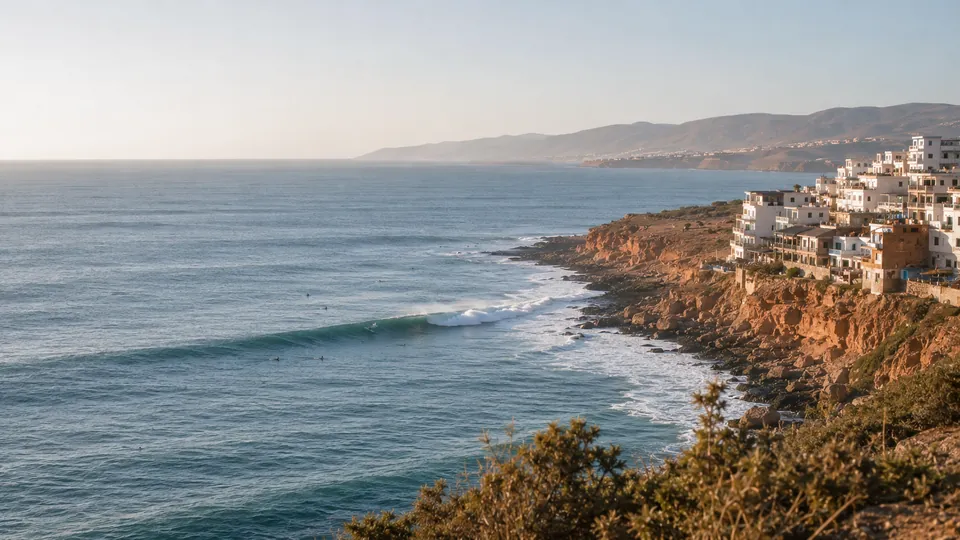
Learning in March

  • For learning : Very good

March is the first month of the year when a beginner in Tamraght is not fighting the swell for a turn. Banana Beach and Devil's Rock are clean four days out of seven, as in winter, and the swell that reaches them has dropped to a size the sandbars handle comfortably. After four winter months of picking your days, March is when most clean days are also learning days. The count has not changed; the waves on those four days have become ones you can learn on.

The school day looks different too. With crowds down to medium, you share the sandbars with fewer groups, and Devil's Rock, the bar of lefts at the northern edge of the village, is quiet even when the surf is up. The water is still 18°C, so a 3/2 suit covers a lesson and a 4/3 is worth it for a long session, but the air at 23°C and eight and a half hours of sun make the time out of the water warm. Take the morning session while the wind blows off the land, and use the afternoon for a second, shorter one if your arms allow. Two hours in the water a day is a good day at this stage, and March gives you the light for it.

Sleep in Tamraght for the walk to the sand; camps there start at 34 € a night, and prices across the region are a step lower than in winter. The village is quiet after dark, restful for a couple and long alone, and Taghazout's evenings are five minutes away. La Baie at Imsouane gives four days in March too, on a right long enough to practise a turn several times on one wave, ninety minutes north. If you have one week and nobody in your group has surfed, April is still the better month. If one of you already surfs and the other is starting, March serves you both, with the points still working ten minutes up the road.

Where a beginner goes in March

These spots are reachable all year. What the month changes is the size of the waves, not the access.

For an experienced surfer

  • Surf : Very good

For someone who already surfs, March at Taghazout is January's swell with a shorter queue. Anchor Point is clean four days out of seven, the same as February, and Hash Point three; the long winter period is intact and only the size has come down, which suits the points better than it hurts them. The exposed breaks are where March shows: Killer Point, Boilers and Cathedral Point drop to two days, because the wind gets at them more often as the season turns.

The crowd is where the month pays off. Numbers drop from high to medium in March, and at a wave that fills as soon as it turns on, that means more waves each session and not just more space. Panoramas becomes worth a look again at the south end of the village: sand at the beach end, reef further out, breaking both left and right, fast and sectiony at low tide and easier as the water fills in. The entry is over rocks at low tide, exactly when it is at its best. Surf the morning offshore at Anchor Point or Hash Point, and keep Panoramas for the rising tide when the points fill up. At 18°C a 4/3 keeps a three-hour session comfortable, and the air at 23°C does the rest.

Sleep in Taghazout, where the points are ten minutes apart by shuttle and Hash Point is a walk from most camps. Beds run from 21 € to 110 € a night, and prices across the coast sit a step below February. If your target is Killer Point or Boilers rather than Anchor Point, March is the wrong month: both are at their best in December, when they give three and four days. If your target is Anchor Point without its winter crowd, March is the best month of the year for it, and the long evenings of a village with room in it again come with the bargain.

  • Intermediate
  • Advanced

Where to base yourself

Taghazout

Questions about March

  • Is March a good time to surf in Morocco?

    Yes, and for many surfers it is the best value of the Moroccan year. In March the swell reaching Taghazout is still long-period winter groundswell, only somewhat smaller, while crowds and camp prices both ease from high to medium. Anchor Point and the Tamraght sandbars each run clean around four days in a typical week.

  • Is March a good month for beginners in Morocco?

    Good, and better than any winter month. By March the swell has dropped enough that Banana Beach and Devil's Rock in Tamraght suit a first lesson on most days, and they still work around four days a week. The sea stays at 18°C, so plan on a full wetsuit.

  • How much rain falls in Morocco in March?

    Very little. Taghazout sees about three rainy days in March, around 31 mm across the month, and after that the coast stays almost dry until autumn. Expect roughly eight and a half hours of sunshine daily and afternoons near 23°C.

  • Where are the quietest waves in Morocco in March?

    Killer Point, north of Taghazout, is rarely crowded in any month, though in March it runs clean only about two days a week. For waves that work more often, Devil's Rock in Tamraght stays quiet even on good days. Across the coast, March crowds sit a step below the winter peak.

Where these figures come from

Air, rain and sunshine: WMO / NOAA 1991-2020 normals. Taken at Agadir Al Massira, some twenty kilometres inland and so a little warmer than the coast in summer. Swell, period and share of workable wind: Swell Archive and surf-forecast. Water temperature: seatemperature.org and weather-and-climate. Crowds and prices are an editorial judgement, not a measurement.

Join the Bookawave adventure

Get our exclusive guides, good deals and surf trip inspiration.

No spam, just surf.