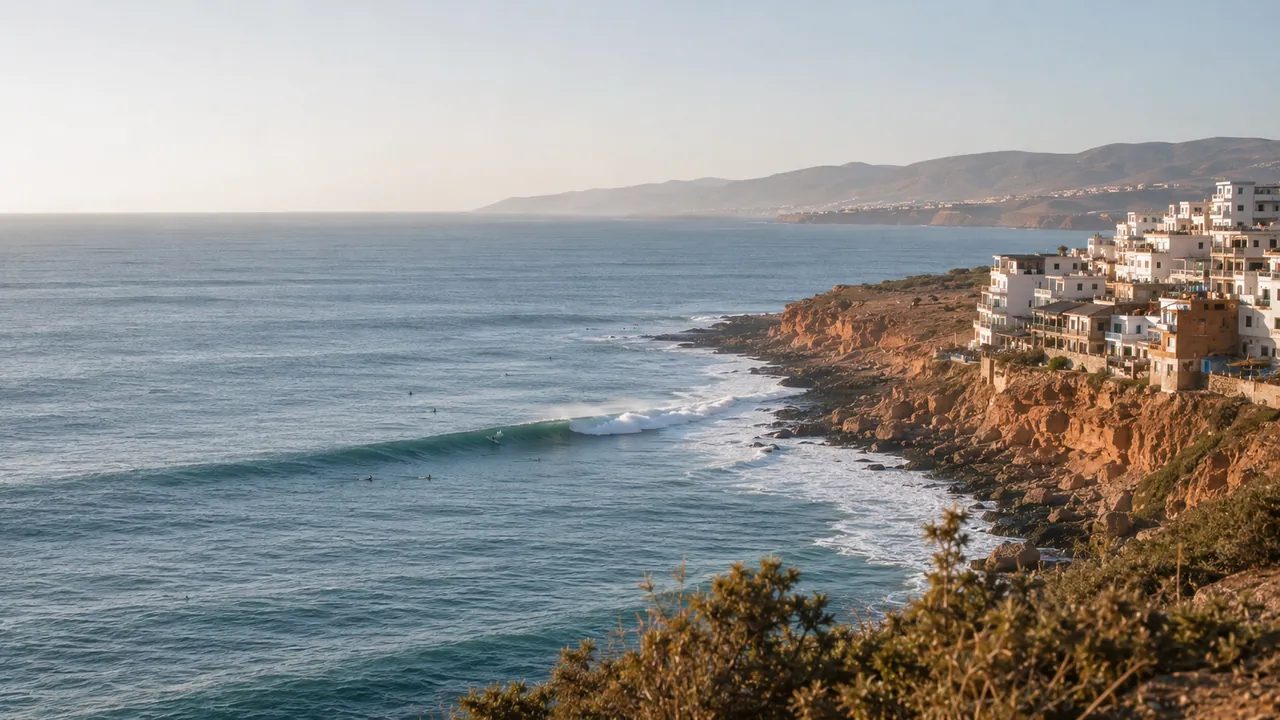
Surfing in Morocco in November

Surfing in Morocco in November

November turns the Moroccan season on, in water a degree warmer than any other peak month.

  • Swell
    2.2 m, 12.5 s
  • Water temp.
    19 °C
  • For learning
    Good

Conditions in November

  • Swell : 2.2 m
  • Period : 12.5 s
  • Water temp. : 19 °C
  • Wetsuit : 3/2 mm fullsuit
  • Air temp. : 24 °C
  • Sunshine hours per day : 7.6 h
  • Rain : 42.3 mm, 3 days
  • Workable wind : 57 %
  • Crowds : High
  • Prices : High

November is when the season arrives. The swell reaches its winter size, 2.2 m at a period of 12.5 seconds, the points are back at their best for experienced surfers, and crowds and prices climb back to high. Of the four peak months, November has the warmest water: 19°C, against 18 in December and January and 17 in February. A 3/2 full suit is enough for a long session, which it will not be again until May.

Counting the clean days, a surfable swell that no wind has chopped up, La Baie at Imsouane, Banana Beach and Anchor Point give four in a week. Boilers, Banana Point and Cathedral Point give three, Killer Point and Hash Point two. The exposed points still lose some days to the wind, which is why December, not November, is their best month. The long period puts several breaks to work on the same morning, and the wind picks between them.

For an experienced surfer this is the start of four months on the points, before the Christmas crowd and the wettest weeks of December. For a beginner it is a good month on the right sand: the sandbars at Tamraght are clean four days in seven, but the bigger swells need steering around, and a camp that moves its lessons to Devil's Rock on the big days makes the difference.

The weather is the cost. November is the second wettest month, three rainy days and 42 mm, and the sun gives about seven and a half hours a day, among the shortest of the year. The air is still 24°C, warmer than any month from December to April. Camps fill again, so book ahead, and look for one that moves its groups to follow the swell; from now until March, that is what a camp is for.
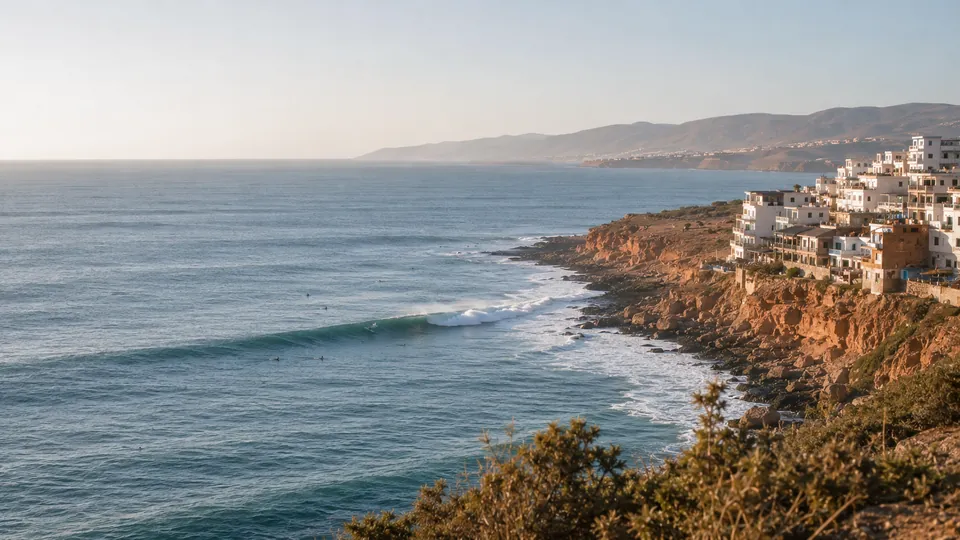
Learning in November

  • For learning : Good

For a beginner, November in Tamraght means choosing the sand over the swell, and choosing a camp that knows the difference. Both Tamraght sandbars run clean four days out of seven, as good as any month of the year, and not all four are days to learn on. The waves on those days are the reason. The winter swell is back at 2.2 m, and on the bigger days a sandbar can be too heavy for a first lesson; Banana Beach, where every school in the valley brings its groups, also gets its crowd back.

Devil's Rock is the sandbar for the big days. Its lefts run fifty to a hundred metres, and it keeps breaking at a size you can learn on when the points have gone beyond sensible, with few people and nothing sharp beneath. The Tamraght camps move their lessons there when the swell builds; ask before you book whether yours does. The water is 19°C, a 3/2 full suit, warm enough that a lesson ends when your arms give out rather than when you start shivering. The air is 24°C, though November brings some of the year's rain, three days of it, and some of its shortest days of sun, so the lesson goes in the morning and the afternoon is for rest.

Tamraght is the place to stay, with camps from 34 € a night and the sand a walk away; Taghazout's communal evenings are five minutes up the road if you are travelling alone. Imsouane gives four days at La Baie, where the bay forgives at any size, ninety minutes north. Do not let a small-looking day talk you onto a point: Panoramas and Anchor Point break over rock at low tide, and in November the sets are bigger than they look from the beach. If you have a choice of month and you are completely new, April or May gives you smaller waves and fewer people; if November is your week, it is a good week on the right sand.

Where a beginner goes in November

These spots are reachable all year. What the month changes is the size of the waves, not the access.

For an experienced surfer

  • Surf : Excellent

November is when an experienced surfer gets the Taghazout points back, in the warmest water of the winter season. Anchor Point is clean four days out of seven, Boilers, Cathedral Point and Banana Point three, Killer Point and Hash Point two. The swell is at its winter size and period, 2.2 m at 12.5 seconds, and at that period several breaks work on the same morning, so the decision each day is made by the wind.

The week falls back into winter habits. Surf the morning offshore. On a stormy morning, when the open coast is a mess, walk to Hash Point at the top of the village, which is almost never blown out; on an onshore morning in Taghazout, drive the twelve kilometres to Boilers, whose channel between the hills and the sea keeps it clean when little else is. Anchor Point fills the moment it breaks, rocks in the line-up and a hollow take-off at the stone end. Killer Point carries walls as good with far fewer people, because the paddle is long on a big day and the regulars surf it all year. At 19°C a 3/2 carries a three-hour session, which February will not allow.

Sleep in Taghazout, camps from 21 € to 110 € a night, and book early: crowds and prices go back to high in November, and the good camps fill. Imsouane, ninety minutes north, has Cathedral Point, three days in November on a short, fast right that barrels at low tide. If you are choosing between November and December, December gives Boilers four days and Killer Point three, their best month, at the cost of the wettest weather of the year and the Christmas crowd. November trades a day on the exposed points for a degree more in the water and calmer weather.

  • Intermediate
  • Advanced

Where to base yourself

Taghazout

Questions about November

  • Is November a good month to surf in Morocco?

    Yes, it is when Morocco's surf season properly starts. In November the long winter swells return to Taghazout, Anchor Point and La Baie in Imsouane each run clean around four days a week, and the sea is still about 19°C. Crowds and prices rise back to their winter level.

  • How warm is the sea in Morocco in November?

    About 19°C, the warmest of Morocco's four peak surf months; December and January are nearer 18°C and February 17°C. A 3/2 full wetsuit is comfortable for long November sessions around Taghazout, with the air close to 24°C.

  • Does it rain in Morocco in November?

    A little. November averages three rainy days and about 42 mm around Taghazout, second only to December, and sunshine averages seven and a half hours, with only December darker. Afternoon air still reaches about 24°C, so a light jacket covers the evenings.

  • Can beginners surf in Morocco in November?

    Yes, on the right sand. In November Devil's Rock and Banana Beach in Tamraght work around four days a week, but the swell is bigger than in spring, so a camp that moves lessons to the most sheltered sandbar each day matters. The bay at Imsouane is the other safe choice.

Where these figures come from

Air, rain and sunshine: WMO / NOAA 1991-2020 normals. Taken at Agadir Al Massira, some twenty kilometres inland and so a little warmer than the coast in summer. Swell, period and share of workable wind: Swell Archive and surf-forecast. Water temperature: seatemperature.org and weather-and-climate. Crowds and prices are an editorial judgement, not a measurement.

Join the Bookawave adventure

Get our exclusive guides, good deals and surf trip inspiration.

No spam, just surf.