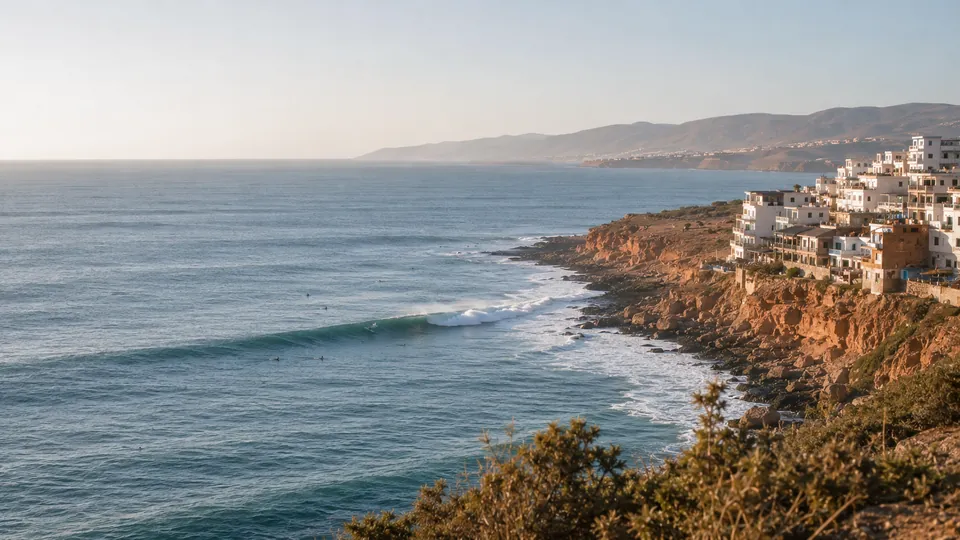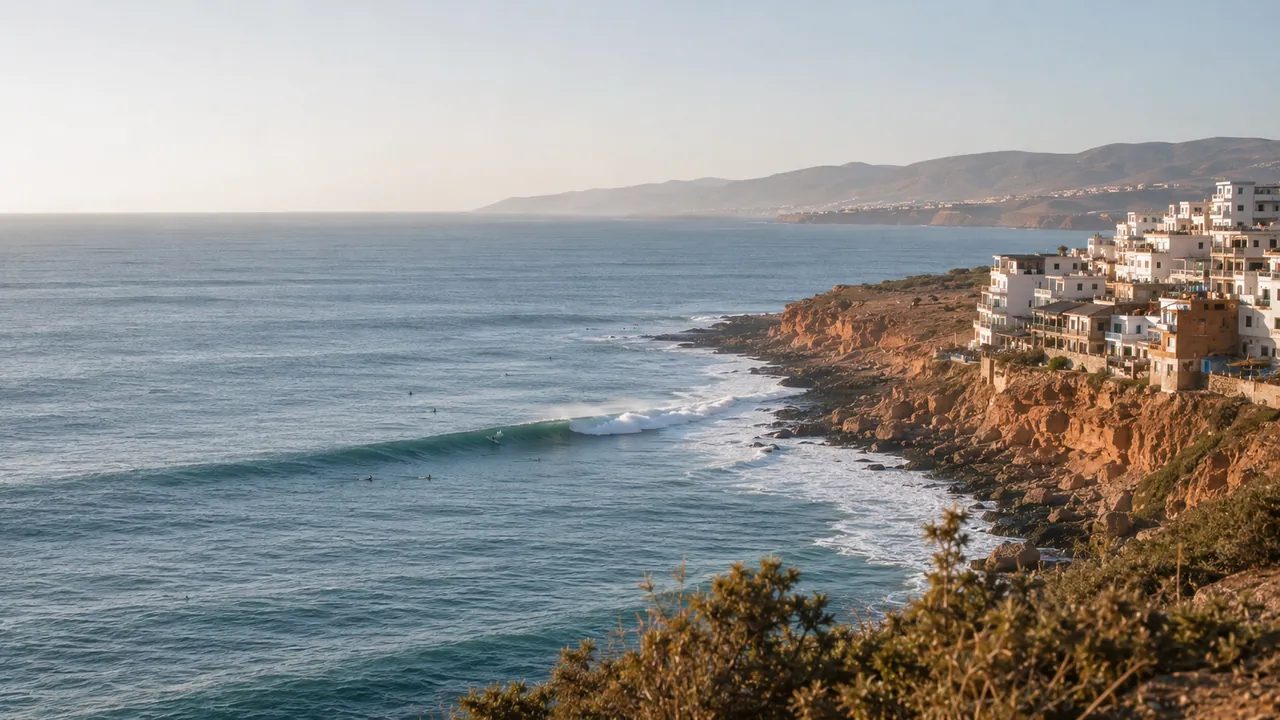
September is when the Atlantic starts sending real swell again, and the period announces it before the size does. It goes from eight seconds back to eleven, which means the waves reaching the coast were raised by storms far away rather than by the wind outside the village, and they have the push to wrap around a point. Size follows, to 1.5 m. The water keeps its summer warmth at 21°C, the air 26°C, and crowds and prices fall back to medium once European schools go back.
The first autumn swells wake the exposed points before the sheltered ones. Count the clean days, when the swell is rideable and the wind keeps off it, and Boilers and Banana Point go to two in a week, after a summer of one day or none; Killer Point and Cathedral Point are still at one. Hash Point, the sheltered break inside Taghazout, stays at one, and nearly every day it loses goes to a swell too small to get in. The sandbars at Tamraght give three, as do La Baie at Imsouane and Anchor Point.
This is the intermediate's month. The swell is large enough to make the easier points and reefs worth surfing and rarely so big that they become a test, and the water is warm enough for a shorty all session. A surfer who can already turn and wants to step up from the sand to La Source, Panoramas or Banana Point will find September kinder than any winter month.
For the week itself, September is the best-value month of the autumn. Prices are medium rather than high, the families have gone home, and on land it is still summer at 26°C, so the evenings are spent outside. Book it if you want the points without their winter queue; if you are coming for the big days, wait for November.