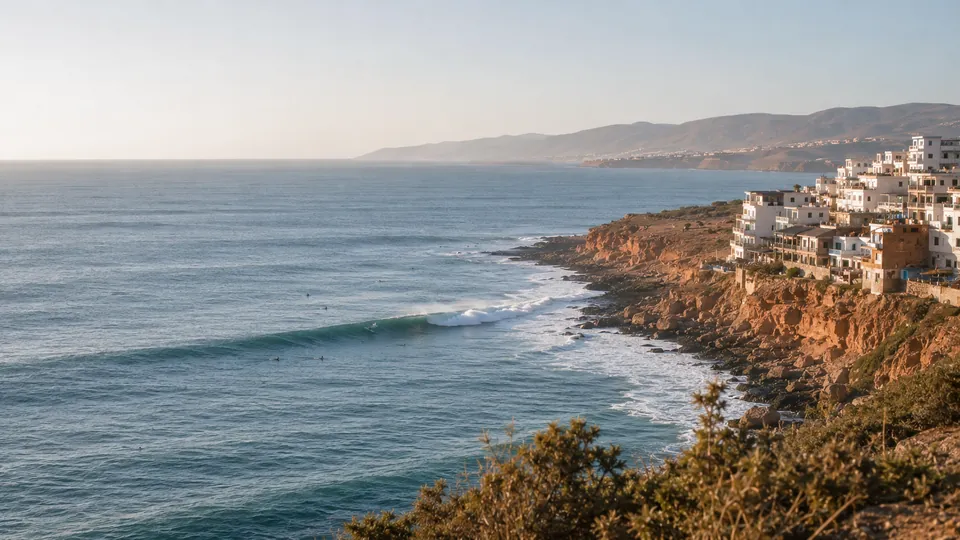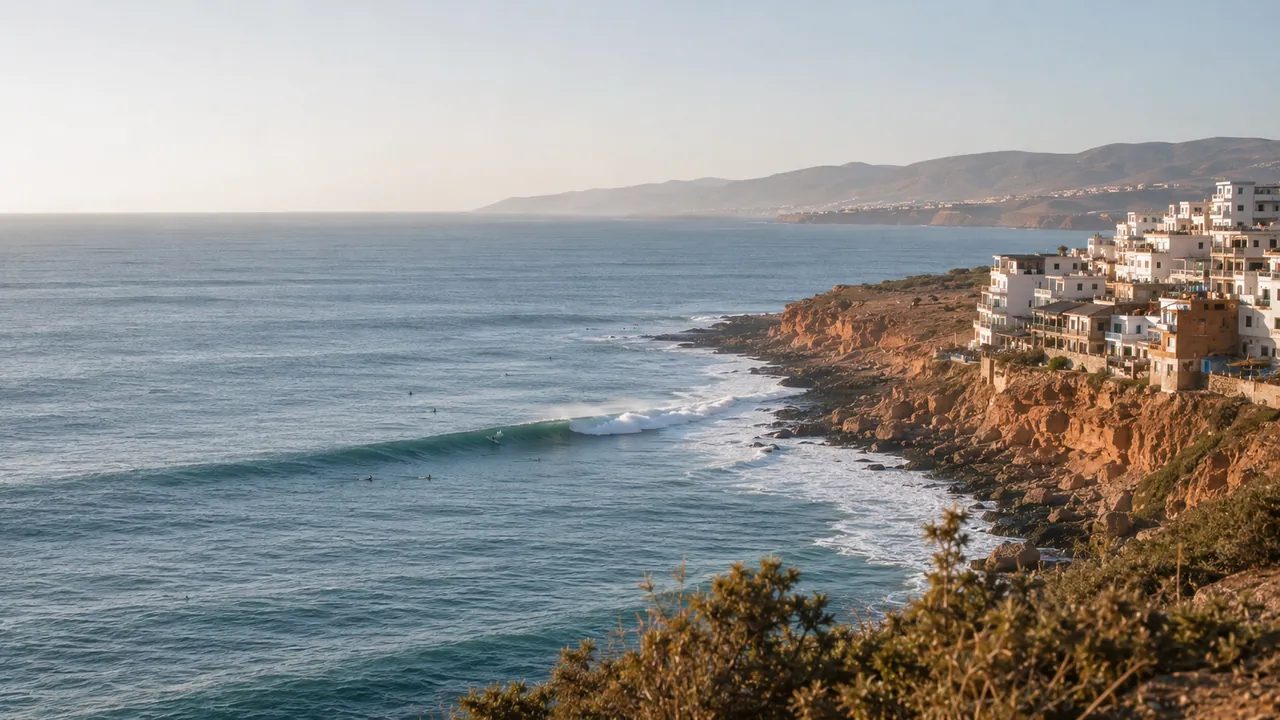
Nothing in the swell changes between January and February. The same North Atlantic systems send the same long-period swell at the same size, and the morning offshore holds as often. The sea is what moves: it reaches 17°C, the lowest reading of the year on this coast. One degree sounds like nothing. Two hours into a session it is the difference between a 3/2 that was fine and a 4/3 you wish you had rented, and a February session tends to end when you get cold rather than tired.
The days barely notice. Counting the clean days, the ones with a surfable swell and no wind to spoil it, Anchor Point and Banana Beach give four in a week, as in January. La Baie at Imsouane slips from five to four. The exposed points feel the wind a little more: Killer Point and Banana Point give two days, Boilers and Hash Point three.
The air makes up for some of it: 22°C in the afternoon, eight hours of sun, and the least rain of the four winter months, so the hours between sessions are spent outside rather than in the camp. Morocco is also the one coast at its winter peak that most of Europe reaches in an afternoon.
What 17°C costs is paid mostly by a learner. Somebody who surfs spends a session paddling, which keeps them warm; somebody learning spends it standing in white water, falling off and wading back out, which does not. A first-timer gets the same four clean days in Tamraght as in January and fewer good hours from each. The fix is a thicker suit from the camp and a second, shorter session instead of one long one. The Christmas peak is behind you; crowds and prices are not.